Recently, Startorus Fusion officially completed its RMB 1 billion Series A financing, once again setting a new record for single financing of domestic private nuclear fusion enterprises. This round of strategic investment led by Shanghai State-owned Capital Investment marks the company’s official integration into Shanghai’s future energy industry layout, injecting strong momentum into the subsequent research and development of fusion technology and its industrialization.
Chen Rui, Founder and CEO of the company, was interviewed by PEdaily, where he systematically reviewed the team’s entrepreneurial journey from the laboratory to commercialization, and shared in depth the company’s strategic thinking on the selection of technical routes, the advancement of engineering, and the pace of commercialization. Chen Rui stated that in the future, Startorus Fusion will fully leverage Shanghai’s multiple advantages in policies, capital, talent, and industrial chain, and fully advance the research and development of controlled nuclear fusion.
Against the backdrop of the accelerated transformation of the global energy structure, controlled nuclear fusion, as a highly promising direction for the ultimate energy source, is enteIn 2021, a turning point was reached when Helion Energy, a US nuclear fusion company, announced the heating of plasma to 100 million degrees Celsius, and Commonwealth Fusion Systems (CFS) secured $1.8 billion in financing. As a result, nuclear fusion reignited a fervent interest in the venture capital community.ring a crucial phase from scientific research exploration to commercial application. Startorus Fusion will continue to advance steadily toward the energy dream of the “artificial sun” through solid engineering practices and continuous technological iteration.
Reported exclusively by PEdaily:
Recalling the first round of financing, Chen Rui said that although “everything is difficult in the beginning”, the angel round financing process was relatively smooth. “From the initial contact with investors to the completion of the angel round financing, the process was interspersed with the Spring Festival, and it actually took five months”.
Undoubtedly, Shanghai has Added Another Powerful Engine to Its Nuclear Fusion Landscape.
I still remember that As Lev Artsimovich, a Soviet physicist and one of the inventors of the tokamak apparatus, said: “Fusion will be realized when the whole society needs it”.
Another RMB 1 Billion Financed for Nuclear Fusion.
By Liu Bo
Reported by PEdaily
Once more, it’s Shanghai.
PEdaily learned exclusively that Startorus Fusion has officially completed its Series A financing round, securing RMB 1 billion in funding. This round of financing was led by Shanghai STVC Group and Shanghai Future Industry Fund, both under the umbrella of Shanghai State-owned Capital Investment, as well as Shanghai CCI Investment Co., Ltd. and JIADING VENTURE CAPITAL as co-lead investors. A consortium of institutional and individual investors including Bank of China Financial Asset Investment Co., Ltd., Ningbo Xichen Private Fund Management Co., Ltd., SUMMITVIEW CAPITAL, Longge Technology, Feitu Venture Investment, SAIC Motor Financial Holdings Co., Ltd., Yankuang Energy Group Company Limited (a subsidiary of Shandong Energy Group CO..LTD.), CIMC Safeway Technologies Co., Ltd., Sunrise Capital Management Co., Ltd. , HUA CAPITAL, Shenwan Hongyuan Securities Co., Ltd., BEFORE CAPITAL and Nebula Asset Management Limited also participated in the investment. The lead investor in the company’s Pre-A round, the Intellectual Property Fund under Shanghai STVC Group, continued to follow the lead.
Thus, the record for the single largest financing round among domestic private nuclear fusion enterprises has been broken once again.
Nuclear fusion has long been regarded as the “ultimate energy source for humanity”, and behind it lies a global energy revolution. Looking ahead, the world is eagerly awaiting the day when the first kilowatt-hour of electricity is generated from nuclear fusion.
Tsinghua Alumni Join Forces
The Largest Nuclear Fusion Financing in the New Year
The story begins in a laboratory at Tsinghua University.
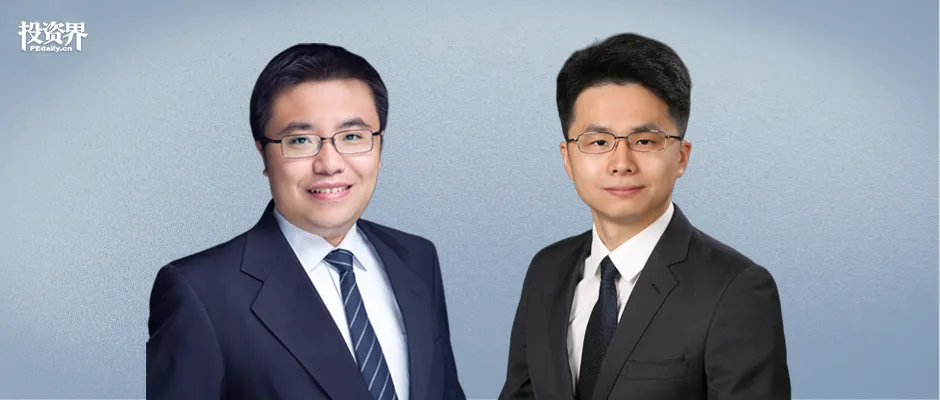
Chen Rui (left), CEO of Startorus Fusion, and Tan Yi (right), Chief Scientist of Startorus Fusion
The entrepreneurial journey of the two individuals actually began in 2016. At that time, overseas nuclear fusion startups were just emerging, and Chen Rui and Tan Yi believed that they could transform nuclear fusion research achievements and exert greater social value. Therefore, they joined forces with another Tsinghua University classmate to establish SUCHEON, pioneering the application of fusion derivative technologies in the industrial sector.
In 2021, a turning point was reached when Helion Energy, a US nuclear fusion company, announced the heating of plasma to 100 million degrees Celsius, and Commonwealth Fusion Systems (CFS) secured $1.8 billion in financing. As a result, nuclear fusion reignited a fervent interest in the venture capital community.
At this point, Chen Rui and Tan Yi felt that the time was right. Having accumulated experience from their first venture, they were fully prepared for the commercialization of nuclear fusion technology. After careful consideration, they officially established Startorus Fusion in October 2021, with Chen Rui as CEO and Tan Yi as Chief Scientist.
Chen Rui recalled to the PEdaily that witnessing the financing boom of overseas nuclear fusion made them realize that this research required a significant amount of capital to propel forward, and it was difficult to achieve groundbreaking results solely relying on laboratory funding. “We were fully aware that if we didn’t make up our minds to start a business, the opportunity would be fleeting”.
With the fusion team from the Department of Engineering Physics at Tsinghua University as its core, Startorus Fusion has rapidly expanded its R&D team from over 10 members at its inception to more than 140 today, with over 70% holding master’s or doctoral degrees. The technical approach they adopt is based on compact, reconnection-controlled fusion technology using spherical tokamaks. Compared to traditional tokamak fusion reactors, this solution features a compact size and simple structure, significantly reducing the construction cost of fusion reactors.

SUNIST-2 Apparatus Jointly Constructed by Startorus Fusion and Tsinghua University
Specifically, this solution can not only be applied to large-scale bulk power stations and distributed power stations, but also, due to its compact and simple structure, holds greater potential for applications in high-integration scenarios such as offshore/deep-sea operation platforms and large-scale ship propulsion systems.
Chen Rui calculated the cost for PEdaily. Based on the scheme of Startorus Fusion, the cost of achieving a Q-value (energy gain coefficient) greater than 1 for the next-generation apparatus is approximately 1.5 billion yuan, which is significantly lower than the cost of apparatus following the traditional large-scale tokamak route.
However, Chen Rui also admitted that since its inception, Startorus Fusion has encountered various unknown challenges. “Because we are taking a path that no one has traveled before, many times we are not expecting problems to arise. We can only rely on experience to locate the issues and solve them from an engineering perspective”.
He clearly remembers that it was over two years ago when the current apparatus of Startorus Fusion (SUNIST-2, a collaboration with Tsinghua University) first started operating. Under normal conditions, there are 18 magnets connected in series, but the calculated resistance did not match. If it is measured and inspected each one individually according to standard methods, it needs to disassemble the apparatus, which would have delayed the project by at least ten days. Ultimately, after research and discussion, the team used ingenious physical methods to locate the specific location of the short circuit in the apparatus and discovered that the cause of the short circuit was a piece of indium the size of a fingernail that fell in during soldering.
Nowadays, the self-sustaining ability of Startorus Fusion is increasingly evident. According to Chen Rui, Startorus Fusion has developed and refined a plethora of peripheral technologies related to fusion reactors, and has made productization a delivery requirement for all internal projects, actively promoting the transformation of technological achievements into commercial products.
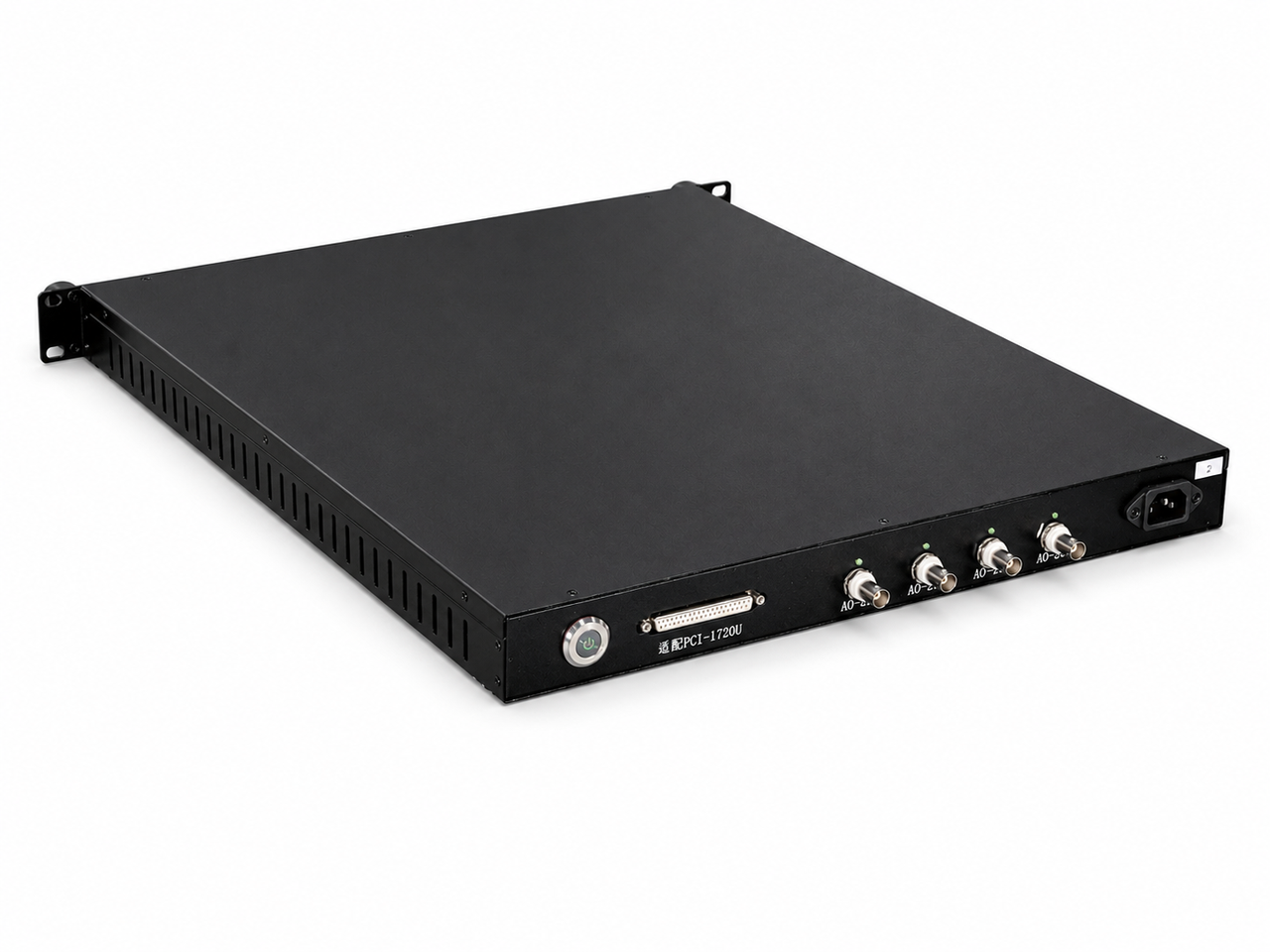
Currently, a comprehensive product line of signal conditioning products have been established, including high-bandwidth isolation amplifiers and analog integrators. Its superconducting collector (EPIC) and single-channel data collector (CoaxLink Nano) enable precise testing and flexible deployment under extreme multi-physics conditions, laying a solid and reliable data foundation for digital fusion reactors and AI-based control systems. The poloidal magnet pulsed power supply, together with the general-purpose pulsed power supply module (IVCube), forms a complete pulsed power supply solution that supports mass deployment and complex control, providing cost-effective power support for fusion apparatus. In addition to supporting fusion research, the self-developed in-situ surface analysis system (LIBS) and electrostatic probe drive system have garnered extensive attention and secured multiple cooperation agreements in such fields as nuclear power, aerospace and high-energy physics. The company’s full-technology-stack capabilities in high-temperature superconducting magnets have also generated spillover effects, leading to a number of development and processing agreements with clients.
Regarding the planning of Startorus Fusion’s Project, Chen Rui stated that the engineering verification will be fully completed around 2028, and the construction of a commercial demonstration reactor will commence. By around 2032, a fusion reaction demonstration reactor capable of generating electricity will be established.
Currently, this hardcore team is moving forward towards this goal. As Tan Yi previously urged, people engaged in Fusion do not have to wait for all conditions to be ripe, but should bravely take practical steps. “All children start learning to walk when their muscles are not strong and their balance is not stable. The same goes for Fusion. We need to solve problems through iteration and accumulate experience through construction”.
VC/PE Gathering
Shanghai State-owned Capital Investment Makes a Big Bet
The gradually emerging Startorus Fusion has also quickly caught the attention of investors.
In June 2022, Startorus Fusion announced that it had secured hundreds of millions of yuan in angel round financing, with investments from multiple institutions including Shunwei Capital, Kunlun Capital, CASSTAR, Telescope Venture Capital, MSA Capital, Sequoia China Seed Fund, K2 Angel Partners, Unity Ventures, Legend Star, Inno Venture Capital, ORIZA SEED and Huafang Capital.
Recalling the first round of financing, Chen Rui said that although “everything is difficult in the beginning”, the angel round financing process was relatively smooth. “From the initial contact with investors to the completion of the angel round financing, the process was interspersed with the Spring Festival, and it actually took five months”.
According to his recollection, although Startorus Fusion was still a startup at that time, the team had rich R&D experience and the company’s valuation was relatively pragmatic, thus winning the recognition of investors. At the same time, Startorus Fusion happened to capitalize on the industry buzz brought by the large-scale financing of CFS in the United States, providing investors with a reference investment case.
Among these, the investment made by CASSTAR in Startorus Fusion left a deep impression on the outside world. Chen Rui clearly remembers that it was one day in March 2022 when he met with Mi Lei, the founding partner of CASSTAR, at the company's Beijing office. “Dr. Mi told me that he had long wanted to invest in a controllable nuclear fusion company, and after researching upstream and downstream along the industry chain for a long time, he finally settled on us, which made me instantly feel a sense of full trust”. Therefore, after only one meeting, CASSTAR became one of Startorus Fusion’s angel investors and increased its investment in the Pre-A round.
In response, Mi Lei also stated to PEdaily that the continuous investment of CASSTAR is not only due to its optimistic view on the technology concept and scarcity, but also a strategic choice for CASSTAR to lay out the “future energy” landscape in the hard technology ecosystem. “The rapid iteration of Startorus Fusion—from the principle verification of ‘0 to 1’ to the construction of the future CTRFR-1 apparatus, precisely validates my concept that ‘hard technology requires patient capital, but also needs rapid engineering iteration’”.
But Chen Rui frankly admitted that every subsequent round of financing for Startorus Fusion would be more challenging than the angel round. As the company develops over time, investors will begin to scrutinize Startorus Fusion’s initial plans, and their expectations will rise. “What we can do is to continue to fulfill our promises and dispel doubts through actual progress”.
Subsequently, in March 2024, Startorus Fusion completed a Pre-A round of financing worth hundreds of millions of yuan. This round of financing was led by Shanghai Intellectual Property Fund, with RDM Venture Capital following as a co-investor, and existing shareholders CASSTAR and MSA Capital continuing to invest.
Until the emergence of this A-round financing, the industry witnessed a landmark event—setting a new record for single-round financing for domestic private enterprises in nuclear fusion.
As one of the leading investors in this round, Shanghai STVC Group stated that the group has long focused on investments in hard-core technologies and future industries. Following the lead investment in Startorus Fusion by our affiliated Intellectual Property Fund in 2024, the Group once again led the investment in this round and facilitated the company’s landing in Shanghai. Throughout this process, the Group has witnessed Startorus Fusion gradually grow into a leading enterprise in China’s controllable nuclear fusion sector, equipped with full-stack independent R&D capabilities, engineering implementation capacity and rapid iteration prowess. This has further strengthened their resolve to support the company in overcoming the technological bottlenecks in developing the “artificial sun” technology.
“Going forward, Shanghai STVC Group will fully leverage its empowering strengths as a provider of ‘patient capital, long-term capital and strategic capital’ as well as its industrial synergy capabilities. We will join hands with Startorus Fusion and industrial chain partners to accelerate the process of advancing fusion energy from ‘scientific experiments’ to “commercial applications”, and jointly build Shanghai into a global highland for advanced energy industries.
SAIC Motor Financial Holdings Co., Ltd., the investment arm of Shanghai CCI Investment Co., also stated that they are highly optimistic about the trillion-yuan-scale track development prospects of controllable nuclear fusion as a strategic emerging industry under the country’s 15th Five-Year Plan. “Relying on its outstanding technological advantages in the high-temperature superconducting strong-magnetic-field spherical tokamak technology route and the profound 20-plus-year accumulation of the full-fledged R&D team from Tsinghua University in the nuclear fusion field, Startorus Fusion has successfully built and verified multiple fusion experimental apparatus, with its core indicators reaching the domestic leading and international advanced level”.
As the investment platform of Jiading District’s Science and Technology Innovation Investment, JIADING VENTURE CAPITAL focuses on the “3+3+1” key industries in Jiading, with the future energy industry being one of its key focuses. In their view, Startorus Fusion’s team has demonstrated profound technical accumulation, clear engineering paths, and strong execution capabilities in the field of controlled nuclear fusion, and has gradually grown into a leading enterprise in the domestic fusion commercialization track. “Currently, Jiading District is focusing on building a ‘fusion energy town’, and the settlement of Startorus Fusion is a key move in our efforts to build an industrial ecosystem. In the future, we will continue to support and serve enterprises to accelerate technological breakthroughs and industrialization processes”.
With the birth of this new round of financing led by Shanghai State-owned Capital Investment, it also marks the official integration of Startorus Fusion into Shanghai’s future industrial layout.
It is understood that Startorus Fusion has reached an important strategic cooperation agreement with the Jiading District Government of Shanghai, and will jointly promote the research, development, and industrialization process of the CTRFR-1 fusion apparatus. According to the agreement, the company will establish a research and development center and experimental base in Jiading, focusing on the engineering verification of fusion technology and promoting breakthroughs in core technologies such as high-temperature superconducting magnets and plasma control.
In Chen Rui’s view, this collaboration will fully leverage the synergistic advantages of government and enterprises: the Jiading District Government will provide comprehensive support in terms of land, funds, talents, and policies; while Startorus Fusion, relying on its technological advantages, will actively play the role of the “chain leader” in the industrial chain, and jointly build a fusion energy industrial cluster with upstream and downstream enterprises.
Undoubtedly, Shanghai has Added Another Powerful Engine to Its Nuclear Fusion Landscape.
Ultimate Energy Source for Humanity
Nuclear Fusion is on the Eve of Commercialization
A similar scene is unfolding frequently in Shanghai.
To this day, this place has emerged as a major hub for the nuclear fusion industry. There is even a saying in the industry: for companies developing nuclear fusion apparatus seeking financing success, Shanghai is the top choice.
The reason why it is the first choice is that Shanghai boasts the most complete and strongest comprehensive nuclear power industry chain in China, encompassing nearly 200 nuclear energy-related enterprises. Among them are leading enterprises such as Shanghai Electric Nuclear Power Equipment Co, Ltd., and in recent years, star enterprises in the industry chain such as Shanghai Superconductor and Energy Singularity have emerged. Meanwhile, on the research side, universities and institutes located in Shanghai, such as Fudan University, Shanghai Jiao Tong University, and the Shanghai Institute of Optics and Fine Mechanics, Chinese Academy of Sciences, host multiple fusion research and development teams.
The most impressive scene was undoubtedly the official establishment ceremony of China Fusion Energy Co., Ltd. held in Shanghai last July. Seven investors emerged from the shadows—China National Nuclear Corporation (CNNC), China National Nuclear Power Co., Ltd. (CNNP), China Petroleum Kunlun Capital Co., Ltd., Shanghai Future Fusion Energy Technology Co., Ltd., National Green Development Fund Co., Ltd., Zhejiang Zheneng Electric Power Co.,Ltd, and Sichuan Fusion New Energy Industry Investment and Development Co., Ltd— announcing a joint investment of approximately 11.492 billion yuan, making it the largest financing event in Shanghai last year.
In March 2024, multiple departments in Shanghai jointly issued the Action Plan for High-quality Development of Shanghai Nuclear Power Industry (2024-2027), proposing that by 2027, the scale of Shanghai’s nuclear power industry will reach 60 billion yuan, basically establishing a world-class nuclear power industry center and establishing the “Shanghai Nuclear Power” brand. At the same time, the plan also clearly states that it is necessary to “carry out research and development of experimental physics, core technologies, and key equipment for magnetic-inertial confinement fusion energy systems, and build an internationally advanced fusion energy center”.
So, just how powerful is nuclear fusion, which is known as the “artificial sun”?
Here’s a vivid example: a cup of D2O (deuterium oxide) can generate 9 million kWh of clean electricity through nuclear fusion, which can power a household for 865 years.
“The significance of controllable nuclear fusion to humanity is basically equivalent to (or even greater than) the significance of fire to primitive humans”, Xian Feng once stated in an article. “Because if it is successful, it means that humanity will henceforth have access to virtually unlimited clean energy—the prices of food, water, and all industrial products that rely on energy as a carrier will drop to negligible levels”. Many investors believe that controllable nuclear fusion will be humanity’s ultimate energy source.
This argument has become even more urgent after the explosion of artificial intelligence. The training of large AI models requires a significant consumption of energy, and nuclear fusion is precisely the breakthrough that can solve this problem. Altman, the founder of OpenAI, is a proponent of this view. He has mentioned nuclear fusion many times in public, believing that AI and nuclear energy are closely related.
At this very moment, the strategic significance of nuclear fusion is self-evident. Investors unanimously share a viewpoint: whoever can lead the new round of “energy revolution” in the future is likely to dominate the future economic paradigm and international rules. As Lei Mi, the founding partner of CASSTAR, has repeatedly stated, the ultimate energy source, “controllable nuclear fusion”, will become the “trump card” for industrial and national competition, and may even surpass the historical contribution of the “steam engine”.
Nowadays, the dream of commercializing nuclear fusion is gradually becoming a reality. According to the Global Fusion Industry Report 2025, it is estimated that between 2030 and 2035, more than 35 companies will build commercial fusion demonstration power plants capable of generating net energy, and another 28 companies plan to connect to the power grid for electricity supply during this period.
A milestone has been reached. The construction of Helion Energy’s commercial fusion power plant in Washington State began in 2025, and it is planned to supply power to Microsoft’s data centers from 2028 onwards. At the beginning of last year, the company announced the completion of a new round of financing worth $425 million, with a valuation of $5.4 billion.
I still remember that As Lev Artsimovich, a Soviet physicist and one of the inventors of the tokamak apparatus, said: “Fusion will be realized when the whole society needs it”.
Perhaps, the day when humans “create the sun” is not far away.