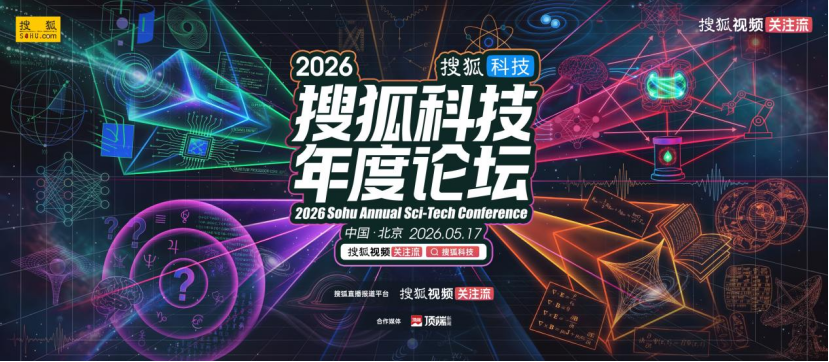
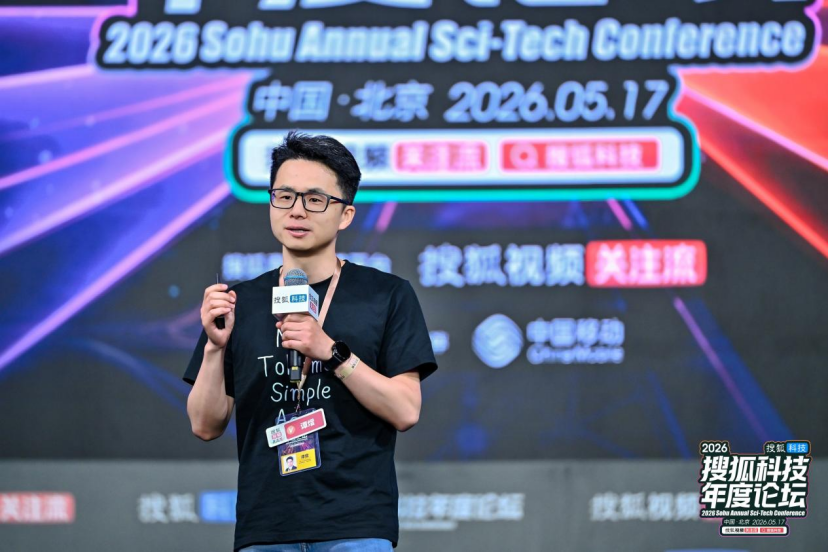
The 8th Sohu Annual Sci-Tech Conference was held in Beijing on May 17. Centered on the theme Exploring Cosmic Truth, Discussing Intelligent Transformation, the event gathered nearly 30 distinguished guests including academician Sun Changpu, Zhang Yitang, Li Miao and Zhang Chaoyang to exchange views on advances in fundamental science and artificial intelligence. Tan Yi, tenured associate professor at the Department of Engineering Physics of Tsinghua University, founder and chief scientist of Startorus Fusion, was invited to deliver a speech titled Will Fusion Energy Still Take Another 50 Years?
In his 22-minute speech, he systematically answered the most frequently raised and doubted question: why fusion energy will no longer take 50 years to achieve commercialization.
1.Core Challenge of Fusion Lies in Economic Viability
A homemade nuclear fusion reaction can be conducted at home with a fusor and heavy water costing merely over 20,000 yuan on shopping platforms. Yet the electricity consumed is tens of thousands times more than the energy generated.
"The real difficulty of fusion development lies in achieving energy output exceeding input and realizing economic profitability."
2.Fusion Triple Product Basically Meets Commercial Standards
Tan Yi illustrated the challenges of fusion energy by analyzing the fusion triple product, defined as ion temperature×density×energy confinement time. The threshold for commercial reactors stands at 3×10²¹ m⁻³·keV·s.
Temperature: Japan’s JT-60U attained around 500 million degrees Celsius back in the 1990s, far surpassing the 100-million-degree threshold.
Density: Power stations only require 10²⁰ m⁻³, while the historical peak has hit 10²¹ m⁻³.
Energy confinement time: the toughest indicator among the three, has reached the second level since the discovery of H-mode in 1982, satisfying operational requirements of fusion reactors.
"Fusion research always brings tremendous hope amid daunting setbacks."
3.Materials and Fuel Develop Alongside Reactor Construction
The first wall of fusion reactors has to withstand 14.1 MeV neutron flux, 200 DPA service life and 20 MW/m² heat flux. Current ODS and RAFM steels have broken the 100 DPA mark, and tungsten-copper divertor targets can endure 10 MW/m² heat flux. Despite notable progress, full standards are not yet fulfilled. Tan Yi pointed out that material research lacks practical test platforms mounted on real fusion reactors rather than advanced laboratories. Hence reactor construction can be launched ahead of full material qualification, with technical hurdles solved during iterative development.
Tritium is currently priced at 30 million US dollars per kilogram due to limited supply solely from Canadian CANDU reactors. In the future, every fusion reactor will serve as a tritium production facility, driving its price down close to marginal cost.
4. A Fundamental Turning Point: The Entry of Venture Capital Slashes the Iteration Cycle from “One Generation Every 20 Years” to “One Generation Every Two to Three Years”
This is the most compelling part of the entire speech.
Before 2022, projects were mainly funded by government resources. Tsinghua University spent 21 years upgrading from the first-generation apparatus to the second. The Southwestern Institute of Physics took 18 years to advance from HL-2A to HL-3. The Institute of Plasma Physics spent over 20 years developing from EAST in 2006 to the upcoming BEST scheduled for 2028.
“Designers could only witness one generation of apparatus in their career. By the time new reactors were to be built, many senior experts would have retired or passed away. Following this pace, fusion commercialization would indeed remain 50 years away indefinitely.”
Since venture capital stepped in after 2022, great changes have taken place. The SUNIST-2 apparatus jointly built by Startorus Fusion and Tsinghua University was completed and put into operation within merely 279 days starting from an empty workshop. The company plans to finish building NTST by the end of this year and CTRFR-1 by late 2028. The iteration cycle has been shortened from 20 years to 2 to 3 years.
“Young engineers can design and construct three to four tokamak facilities within a decade, accumulating experience far more rapidly than before.”
5.Carbon-Silicon Collaboration Accelerates R&D Progress
Tan Yi introduced that Startorus Fusion has fully implemented carbon-silicon collaboration company-wide since 2026, granting all staff free and unlimited access to tokens for premium AI models. As a result, the electronics team cut the man-days for power controller development from 120 to 25, and the plasma scientific computing platform was operational in just one-sixth of the original time.
“Commercial capital support combined with AI collaboration sharply boosts our problem-solving efficiency.”
“I look forward to the day in the 2030s when household electricity is supplied by fusion power plants.”