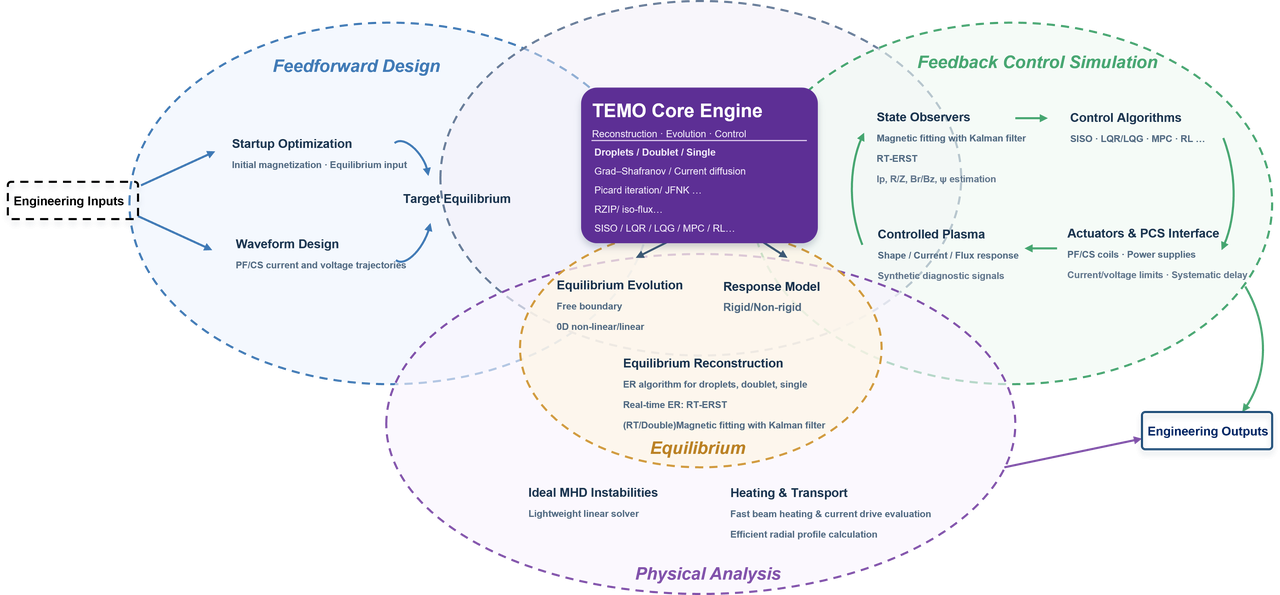
TokaPCS (Tokamak Plasma Control System) is a fully self-developed plasma control system by Startorus Fusion. Its hardware is built on x86 servers and low-latency PCIe NTB interconnect technology, combined with EtherCAT (Industrial Ethernet Fieldbus), to achieve a deterministic 10-kHz control cycle. The software adopts a dual-kernel real-time architecture based on Linux and Xenomai, together with a Python development framework. This design addresses the jitter issues encountered by general-purpose computing platforms in hard real-time control, enabling the control system to combine high real-time performance with versatility. At present, a range of control algorithms—including RZIp_SISO, RZIp_LQR, RZIp_LQG, RZIp_MPC, iso-flux_SISO, physics-based and data-driven reinforcement learning (RL), and density-feedback control—as well as real-time observation algorithms such as RT-ERST and magnetic reconstruction with eddy-current estimation, have been deployed on the TokaPCS hardware and software framework. A series of feedback-control experiments has also been conducted.
Features
TokaPCS is fully self-developed, enabling its hardware, software, and algorithmic architecture to be adapted promptly to evolving R&D requirements.
Built on x86 servers and low-latency PCIe NTB interconnect technology, TokaPCS delivers high real-time performance and versatility, providing a solid foundation for feedback-control research.
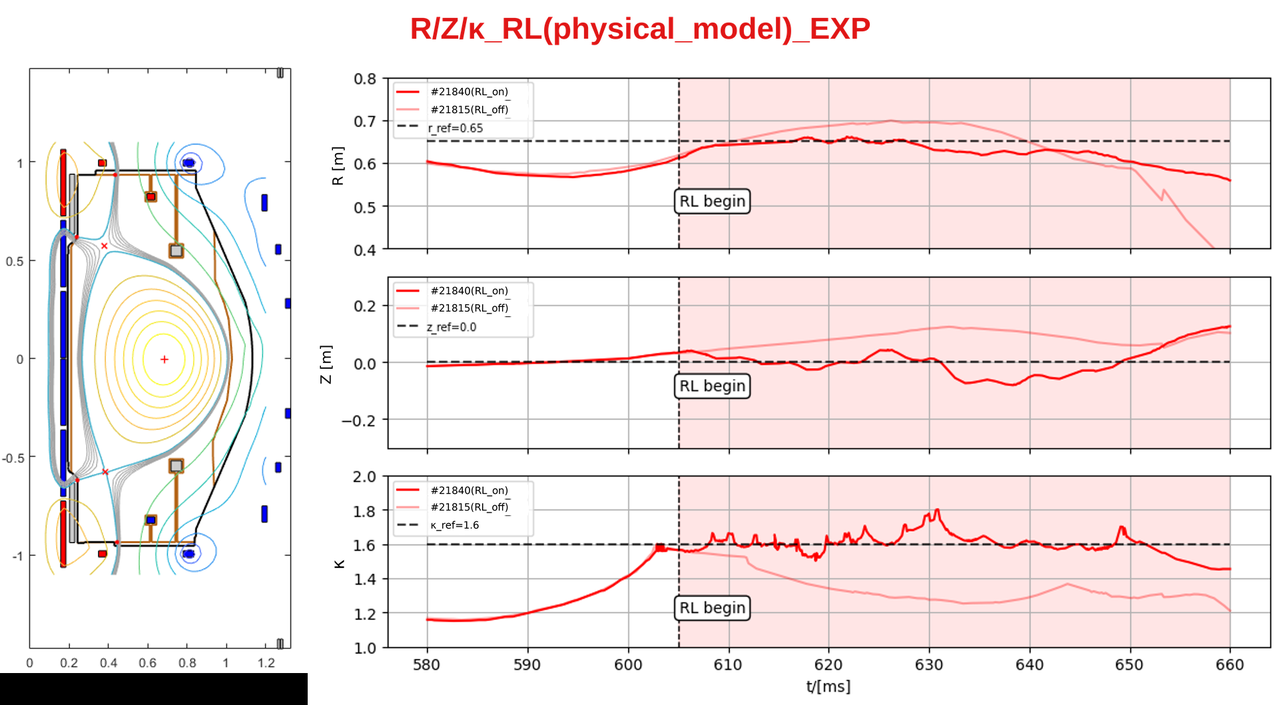
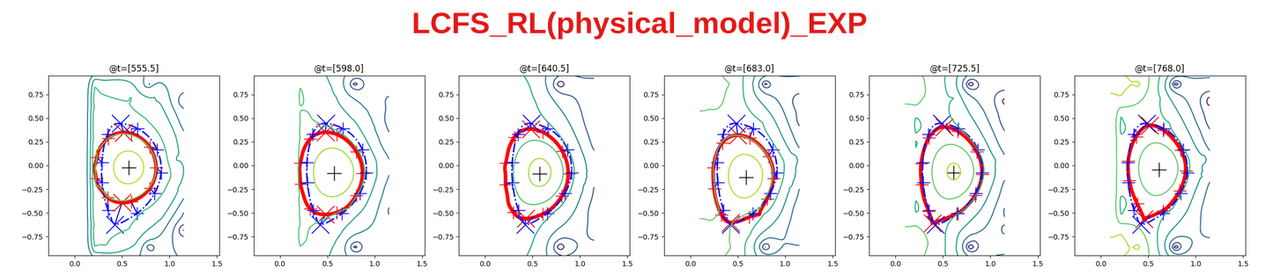
With physics-based and data-driven reinforcement learning (RL), density-control algorithms, RT-ERST, and other capabilities, TokaPCS can intelligently adjust plasma parameters and profiles through feedback during plasma discharges.
| TokaPCS Specifications | |
| Hardware Architecture | x86 general-purpose servers, NTB transmission channels, Ethernet, EtherCAT (Industrial Ethernet fieldbus), and direct-fiber 10 GbE connections. |
| Software Architecture (Excluding Control and Observation Algorithms) | PCS node operating system (Linux + Xenomai) and EtherCAT master software, together with modules for data acquisition and preprocessing, time synchronization, task scheduling, log monitoring, and the human–machine interface. |
| Control and Observation Algorithms | RZIP_SISO,RZIP_LQR,RZIP_LQG,RZIP_MPC,ISOFLUX_SISO,RL(data-driven and physics-driven models) ;RT-ERST and magnetic reconstruction with eddy-current estimation (applicable to both singlet/doublet configurations). |
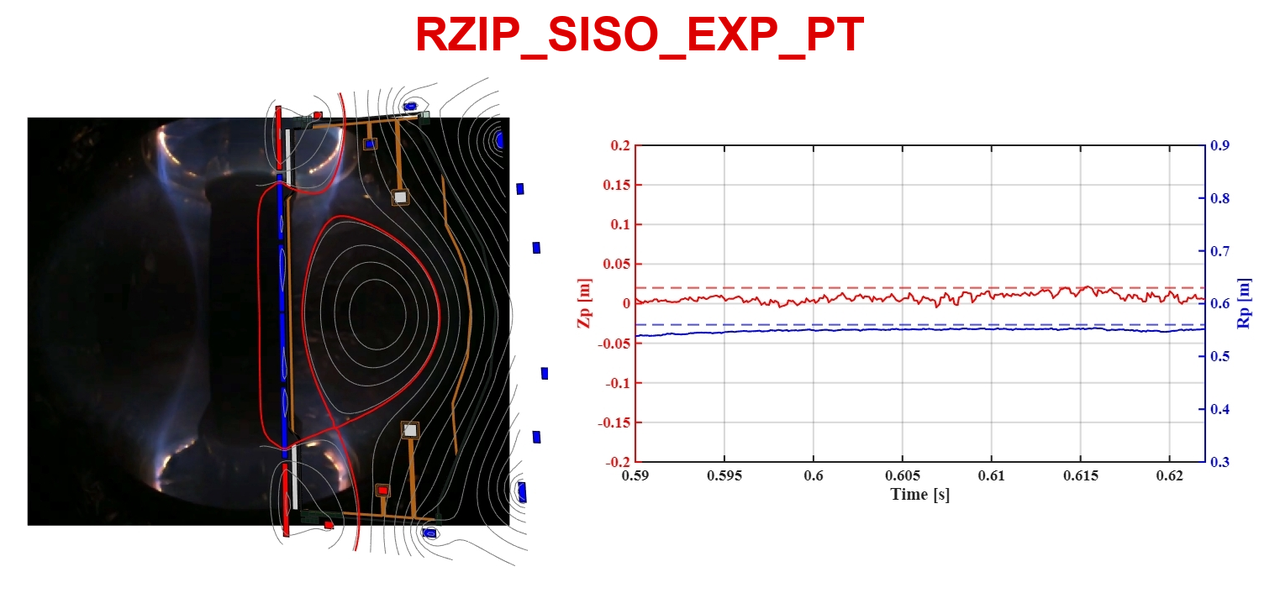
| Control Experiments Conducted on the Platform | RZIP(Droplets/Singlet)_SISO,RZIP(Singlet)_LQR,RZIP(Singlet)_LQG,RZIP(Singlet)_MPC,ISOFLUX(Singlet)_SISO,RL(Singlet/data-based, model-based). |
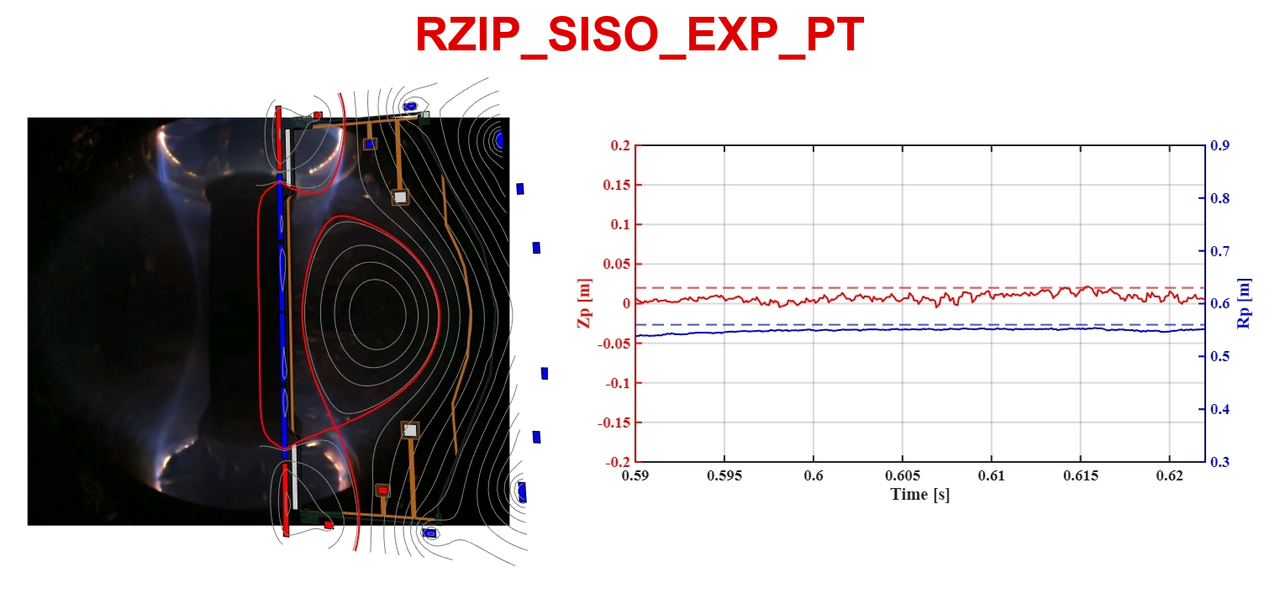
RZIP_SISO Control:Based on real-time acquired data, the singlet/doublet magnetic fitting code with eddy-current estimation provides RZIP observables, enabling RZIP_SISO control experiments in diverted configuration.
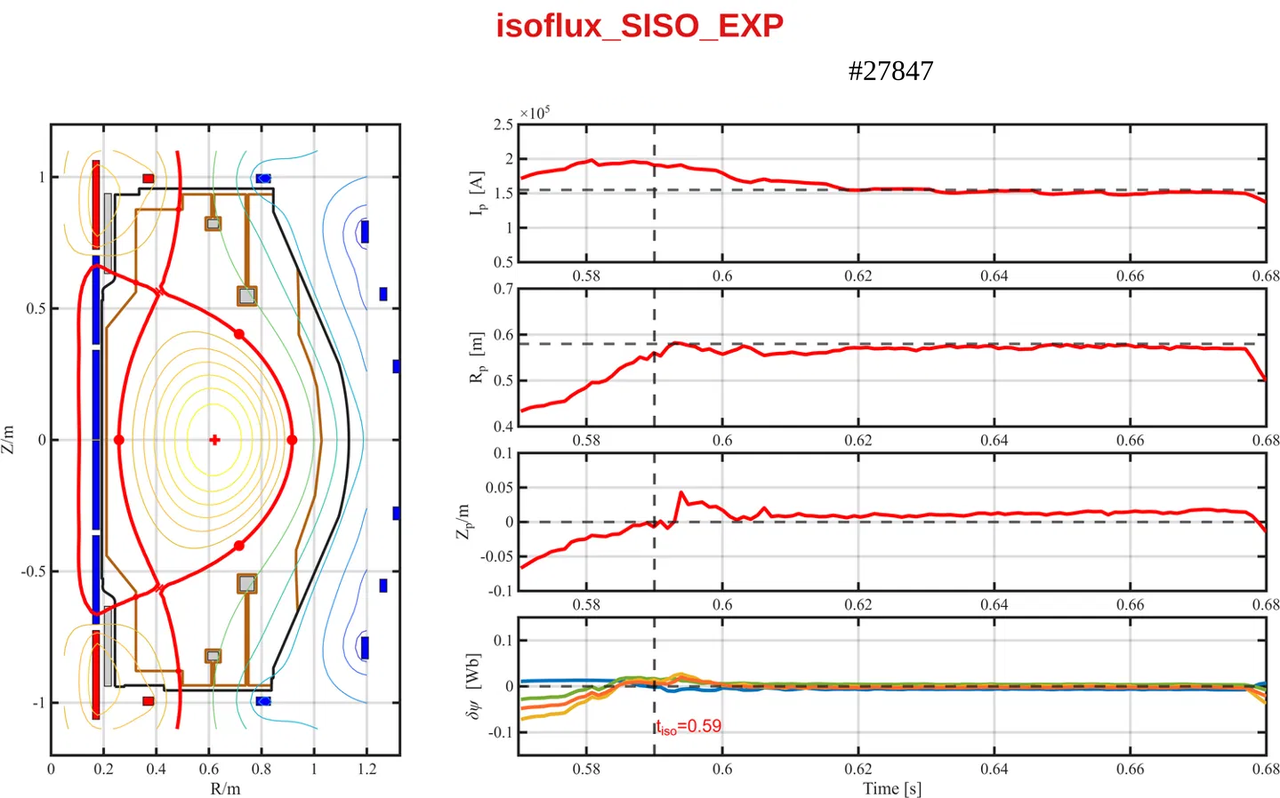
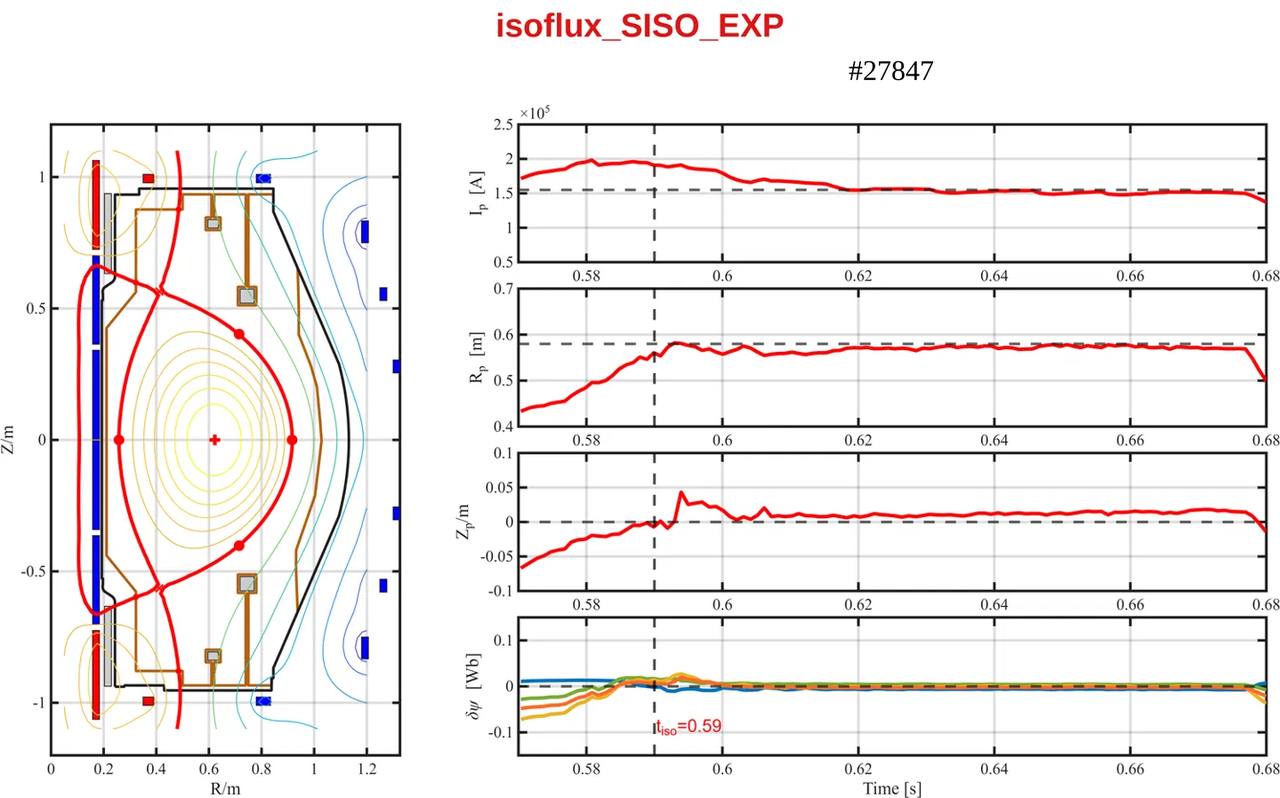
isoflux Control:Based on real-time acquired data, the results of the singlet/doublet magnetic fitting code with eddy-current estimation are used as the initial magnetic flux, while the real-time equilibrium reconstruction code RT-ERST provides accurate magnetic-flux observables, enabling isoflux_SISO control experiments in a diverted configuration.
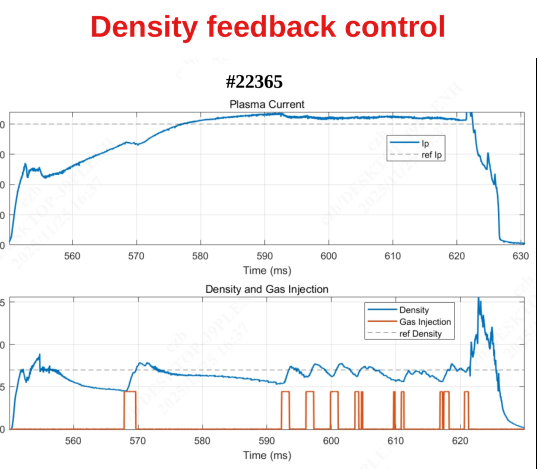
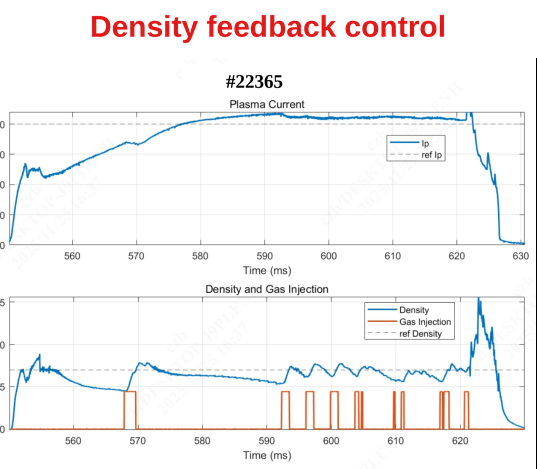
Density Feedback Control:Using real-time THz density measurements and an SMBI system capable of high-frequency switching, basic density-feedback control experiments were completed.
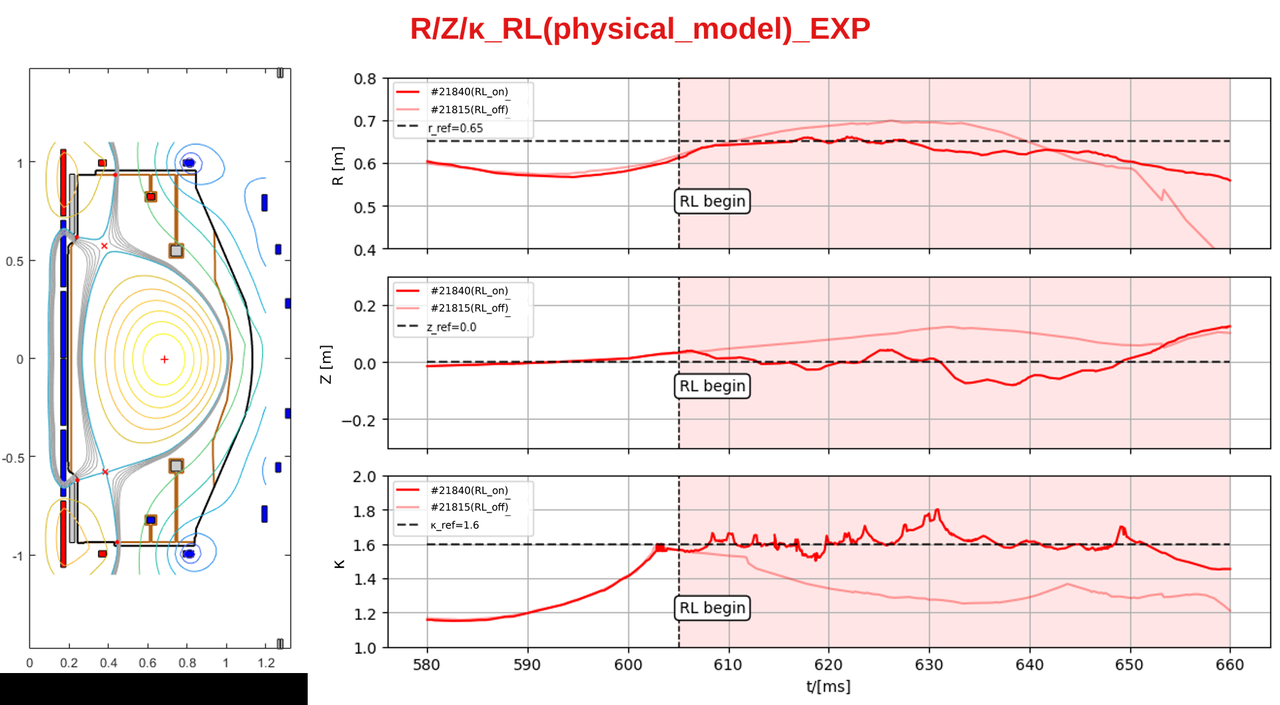
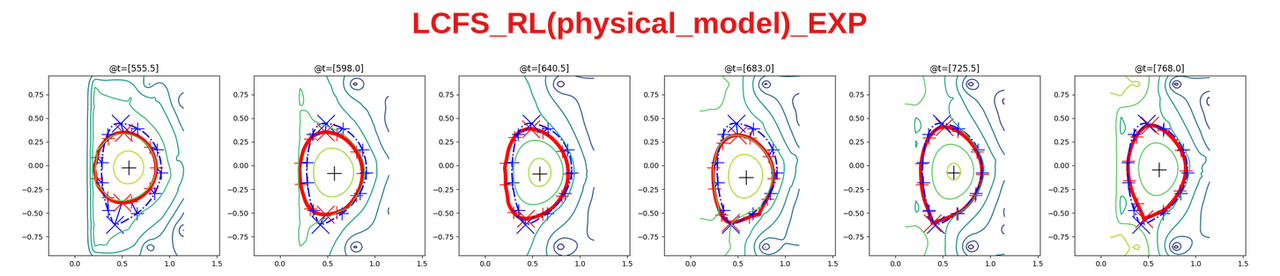
Reinforcement Learning Control:Using real-time acquired data, augmented data provided by magnetic reconstruction with eddy-current estimation, and a controller trained with TEMO-FBEE, basic reinforcement-learning experiments for R, Z, κ, and the LCFS were completed.