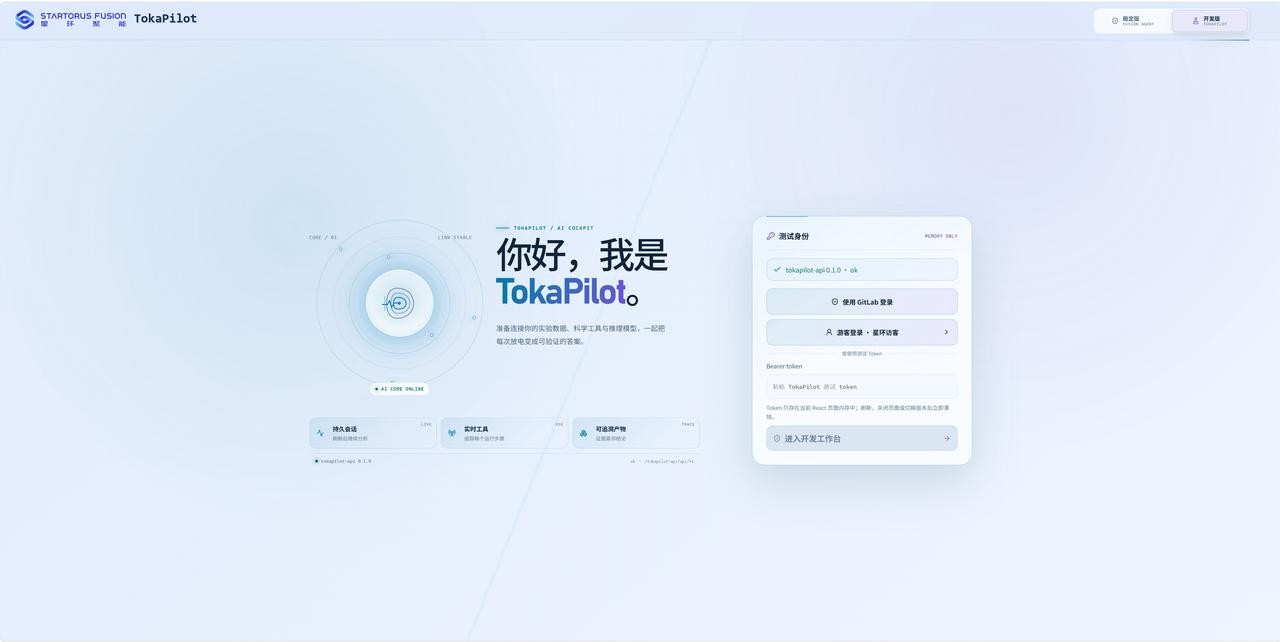
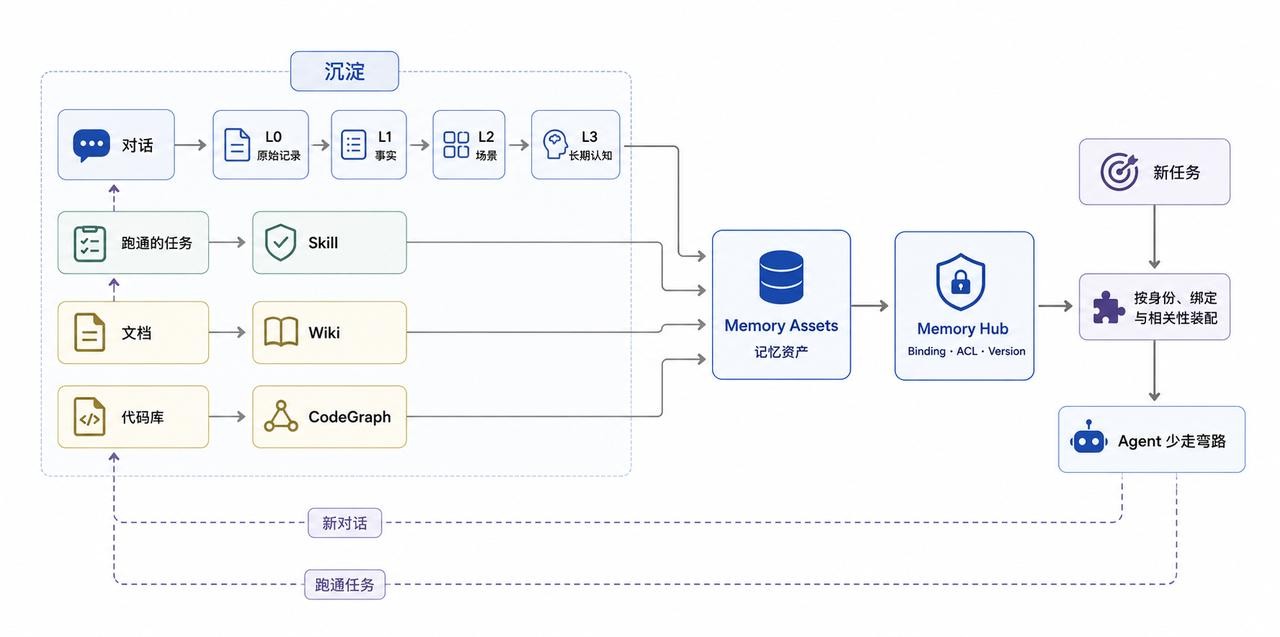
Built for SUNIST-2 experiment analysis, TokaPilot brings experimental data, analysis programs, diagnostic tools, and shared knowledge into a single entry point. Researchers use natural language to query shots, retrieve data, plot, analyze, summarize, and review anomalies.Hand repetitive data retrieval, script hunting, and figure stitching to the system—people only verify results and make physics judgments. Single-shot waveforms, discharge summaries, threshold adjustment, and anomaly detection can all be delegated to it, with results returned as plots, tables, and reports. Web and Feishu data stay in sync, so you can start an analysis anytime.
| Parameter | Value |
| Channels | Web (SSE), Feishu (WebSocket) |
| Model protocols | OpenAI Chat Completions / Responses / Anthropic Messages |
| Data sources | IMAS, MDSplus, PostgreSQL, experiment-record mirror, PCS configd, Label Studio |
| Tools / Skills | 70+ tools; 36 skills in skills.toml (30 ready + 6 planned) |
| Capability registry | 16 entries in capabilities.toml (data.imas.read, experiment.records.read, analysis.discharge-summary…) |
| Storage | PostgreSQL/SQLite + shared RWX file storage / optional S3 |
| Security | Key AES-256-GCM, HMAC, RBAC, Capability Registry, non-root read-only containers |
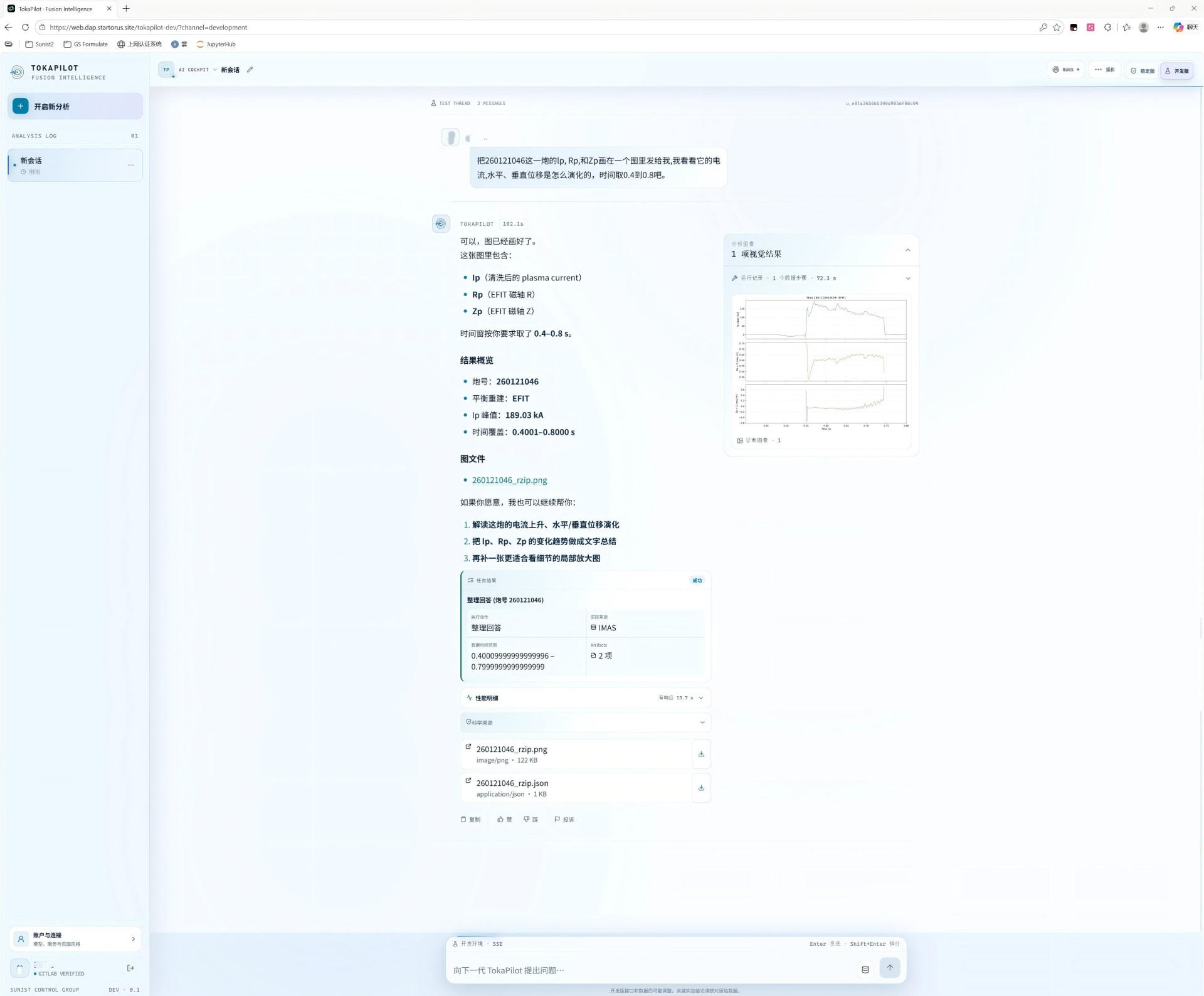
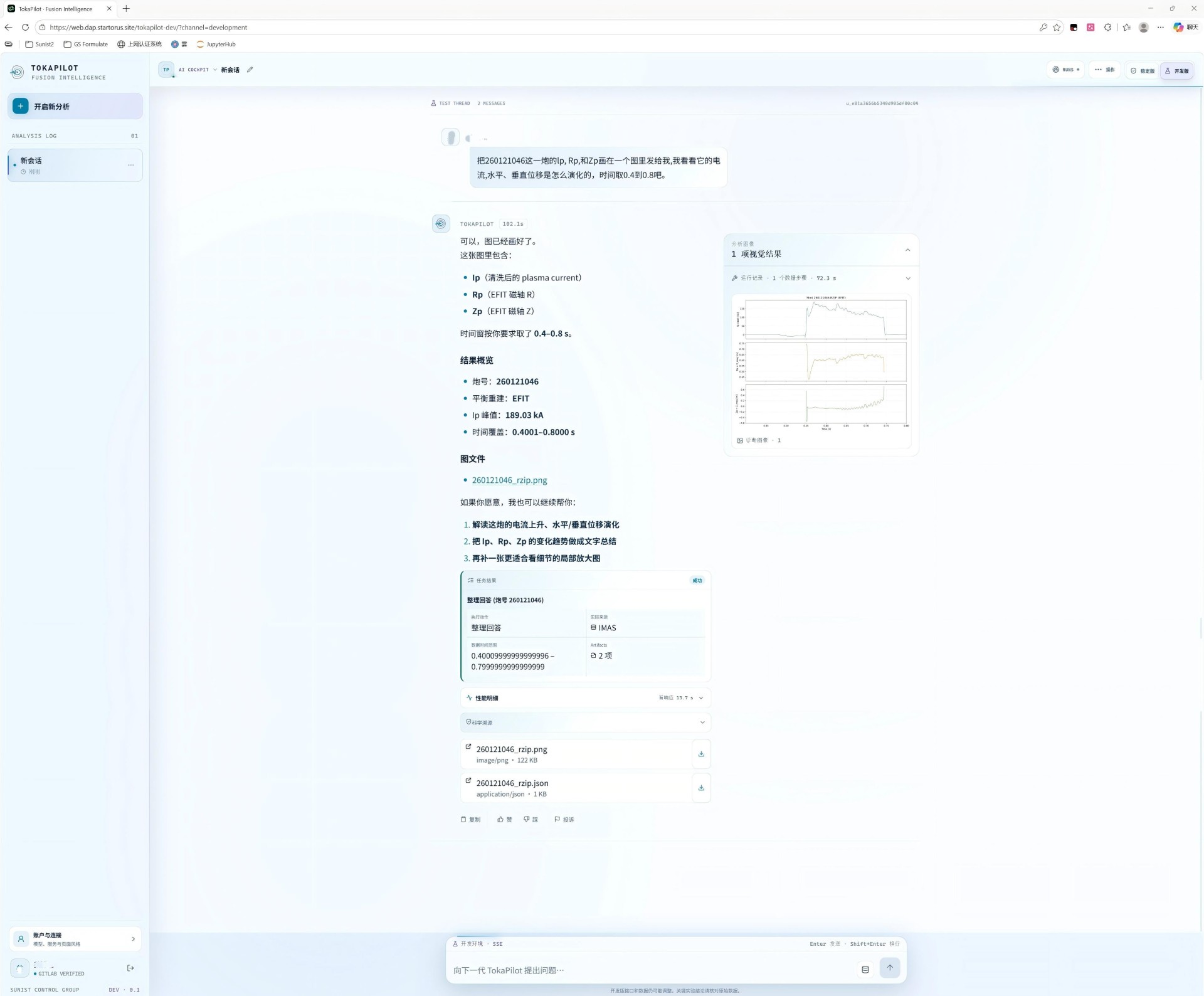
One-line experiment analysis:One prompt—"generate the combined Ip, Rp, Zp waveforms for shot 260121046"—retrieves data, runs the inversion, and returns results. Researchers can also ask more complex questions such as "analyze today's vacuum conditions", "analyze the startup failure", or "show me the MHD analysis for this shot".
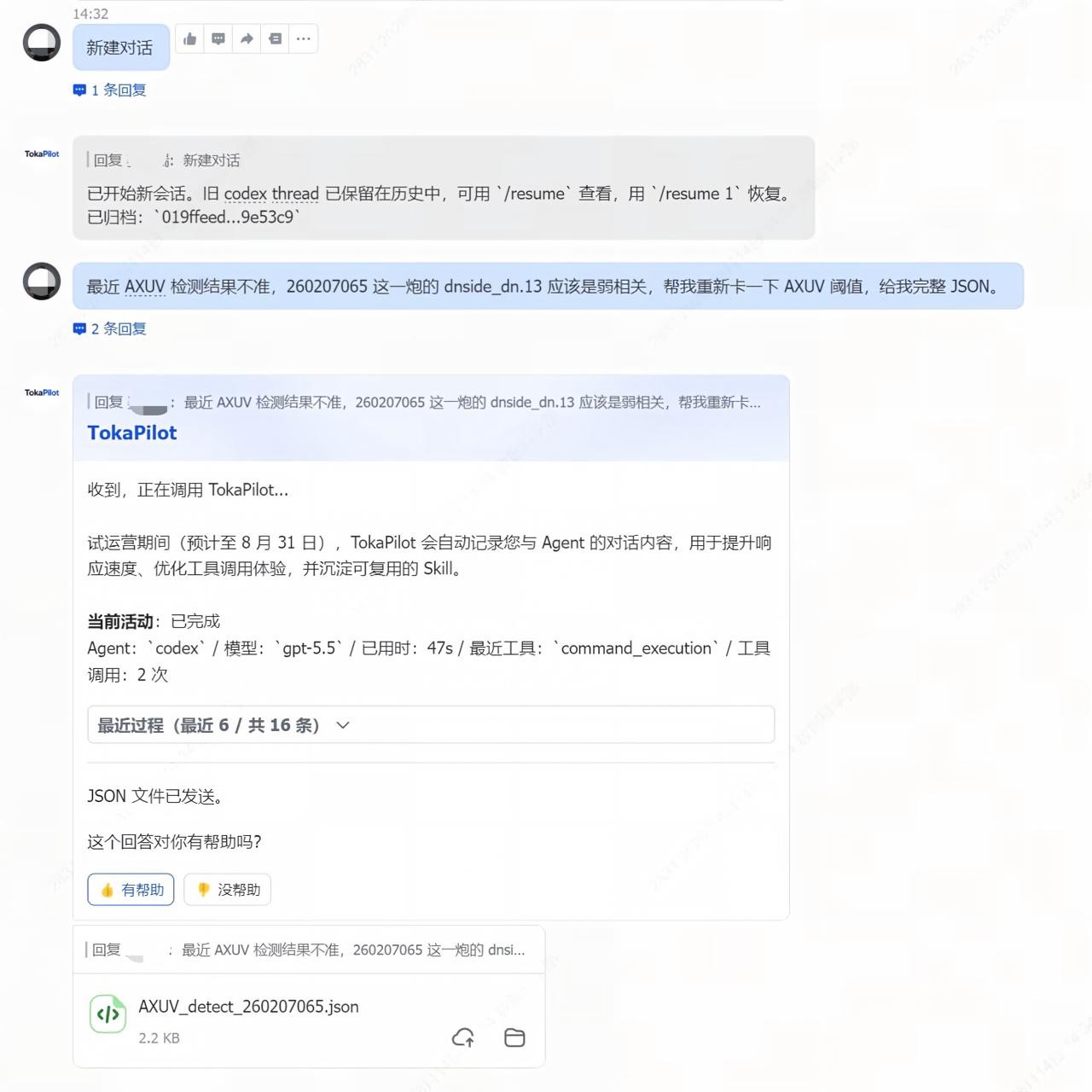
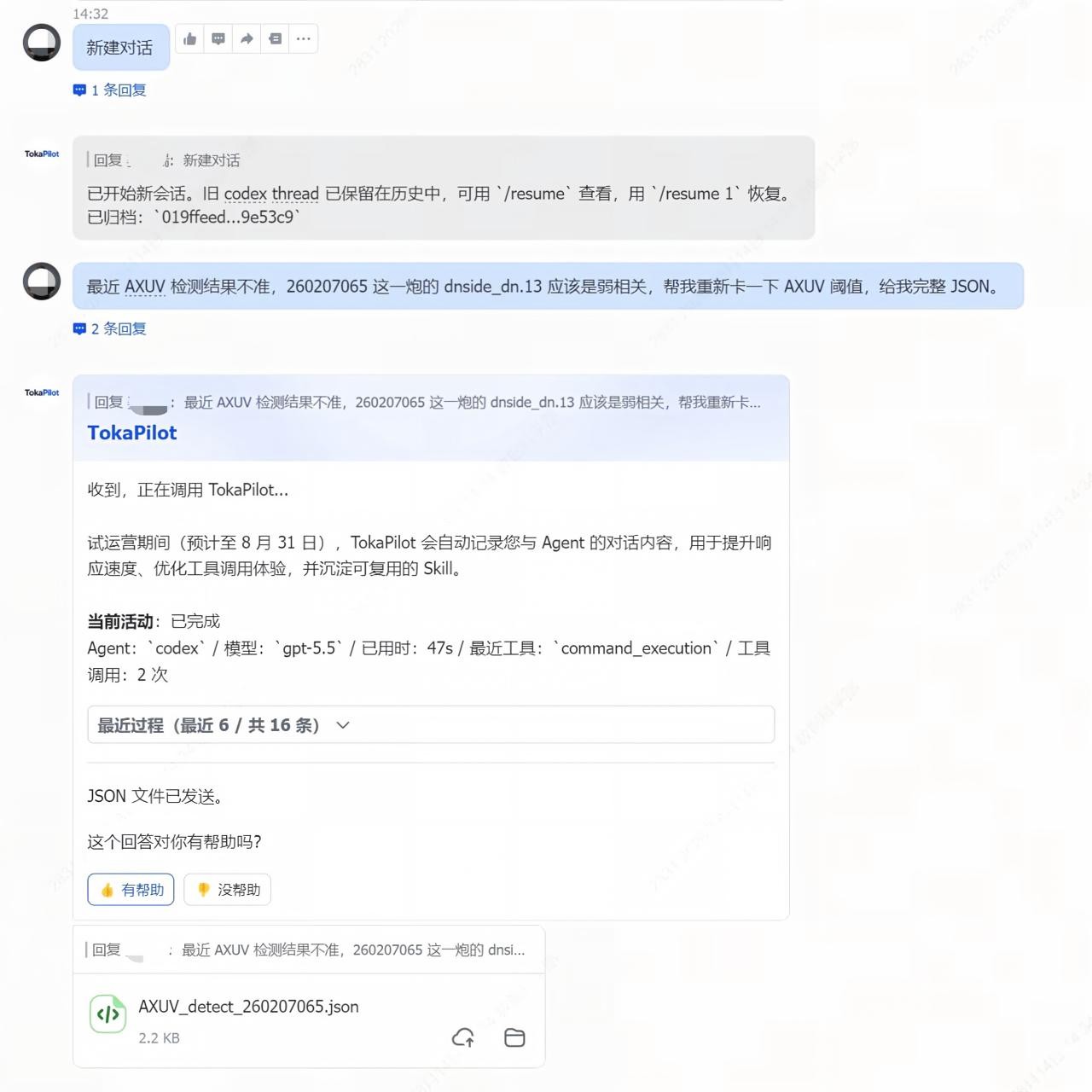
Natural-language anomaly-detection threshold adjustment:Specify the shot, channel, and target, and it returns candidate thresholds automatically—the full provenance of every parameter is traceable.
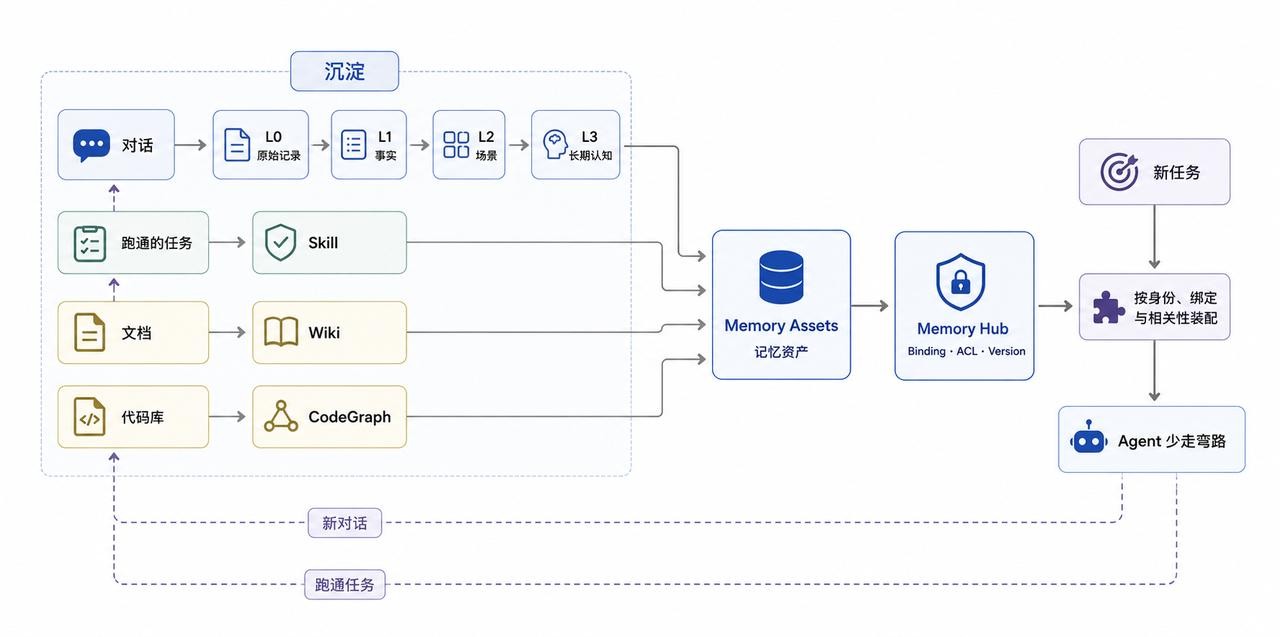
Distilling conversations into reusable Skills:Proven workflows are distilled into Skills that colleagues reuse directly—no repeated trial and error.