Startorus Fusion
The central solenoid model coil for spherical tokamak apparatus has completed low temperature current carrying and fast discharge tests at 6350 A. It achieves a peak magnetic field of 10T and a magnetic field ramp rate of 63 T/S, making it the fusion superconducting magnet with the highest known magnetic field ramp rate to date.
Recently, the central solenoid model coil independently developed by Startorus Fusion successfully completed excitation tests at 6350 A under a low temperature of 20K (-253℃). It reaches a peak magnetic field of 10 T and a central magnetic field of 7.6 T, and has completed a fast discharge test tailored to the ohmic discharge requirements of tokamak.
Serving as an engineering verification prototype for the CS magnet of the CTRFR‑1 (Startorus One) apparatus, this test validates key links covering magnet design, fabrication, assembly, low temperature operation and discharge testing. It provides critical support for subsequent design optimization, process finalization and system integration of the central solenoid magnet.
High Engineering Current Density And Fast Discharge Capability, Key Indicators For Central Solenoid Magnet
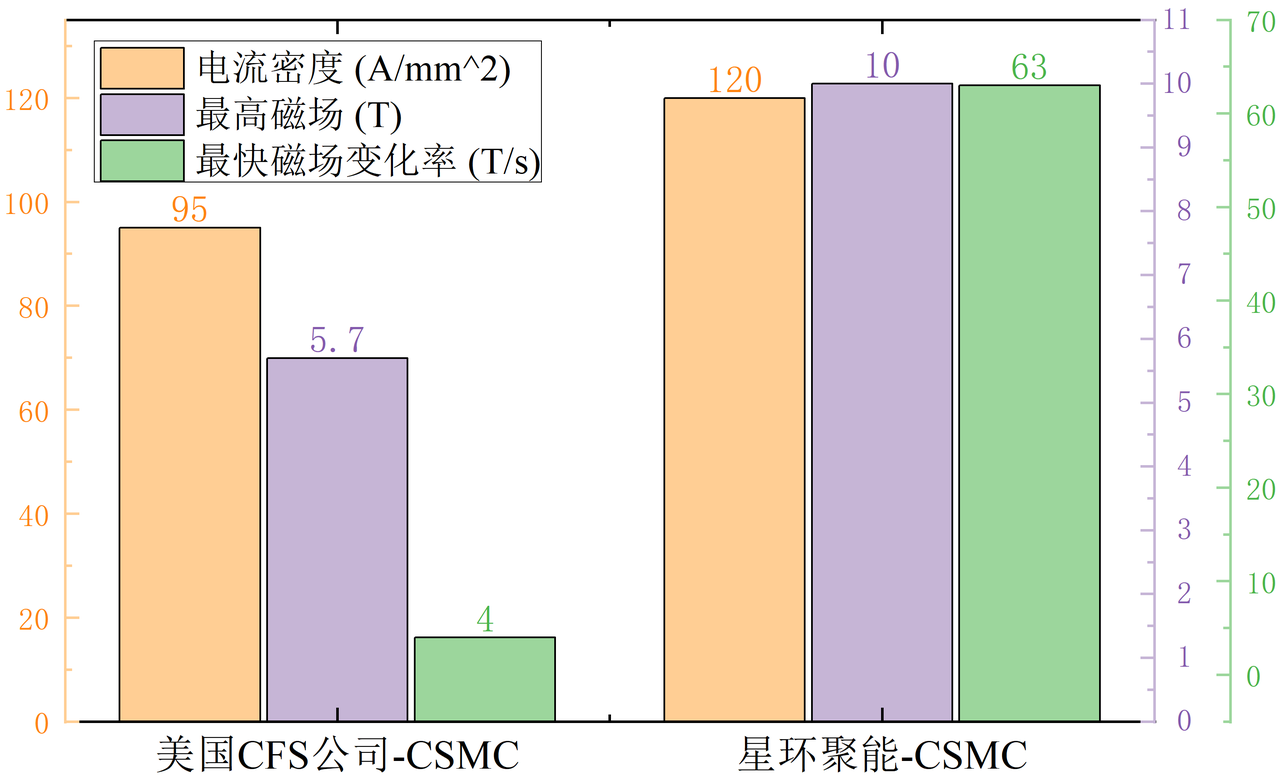
Comparison of Main Parameters of the CSMC Magnet
The central solenoid magnet serves as a core component of tokamak apparatus and undertakes critical tasks including plasma initiation and current ramp up. Targeting the compact space at the central region of CTRFR-1 apparatus and the requirements for plasma discharge, Startorus Fusion prioritizes the improvement of engineering current density in this model magnet design while meeting the demands for high field operation and fast discharge. The magnet has an inner diameter of 350mm, outer diameter of 520 mm and height of 270 mm, with an inductance of 71 mH, and the tape current density stands at approximately 290 A/mm². After including structures such as support frame, joints and cooling plates, the overall engineering current density reaches 120 A/mm². These figures demonstrate the company’s technical strength in developing compact central solenoid magnets with high current density and fast magnetic field ramp rate.
During this low temperature test, the magnet carries a current of 6350 A. It reaches a peak magnetic field of 10 T and a central magnetic field of 7.6 T. Stable operation and fast discharge tests are completed. The maximum current ramp rate hits 40 kA/s, the peak voltage reaches 2850 V, and the fastest magnetic field ramp rate is 63 T/s, corresponding to a loop voltage of 6.75 V for the apparatus. Test results show that the magnet can withstand electromagnetic force and thermal load during high current excitation and fast discharge.
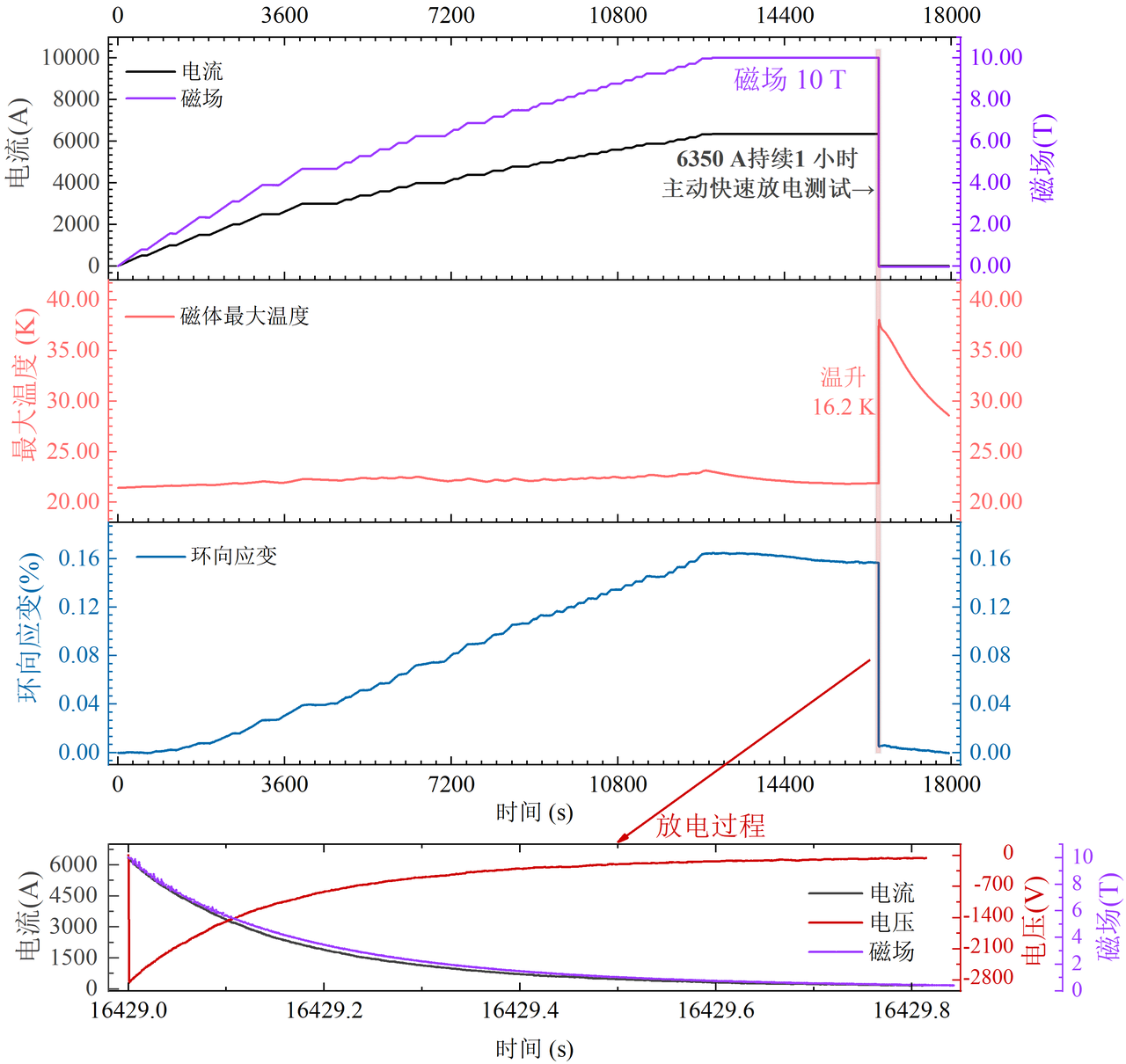
6350 A Excitation and Fast Discharge Process
More importantly, after dozens of cycles of current feeding, demagnetization and fast discharge tests, the magnet maintains stable main performance and key test signals. This outcome validates the feasibility of the electromagnetic design for high current density, coil fabrication and overall assembly process, low temperature cooling scheme and fast discharge operation sequence. For central solenoid magnets responsible for plasma initiation and current ramp up, these tests provide vital engineering reference for the subsequent design optimization, process finalization and system integration of the CS magnet on the CTRFR 1 apparatus.
Synchronous Verification by Fiber Optic Monitoring Offers a New Method for Health Monitoring of Large Magnets
During the magnet test, Startorus Fusion carried out synchronous fiber optic monitoring of key physical parameters on the magnet and its core structures. The team adopted self-developed fiber optic interrogators and compared fiber optic signals from the same measuring point with readings from strain gauges and temperature sensors. Available data show that signal variations acquired by fiber optic and conventional measurement methods are largely consistent at identical positions, with highly matched test responses. Cross validation of fiber optic monitoring results has been achieved at the preliminary stage.
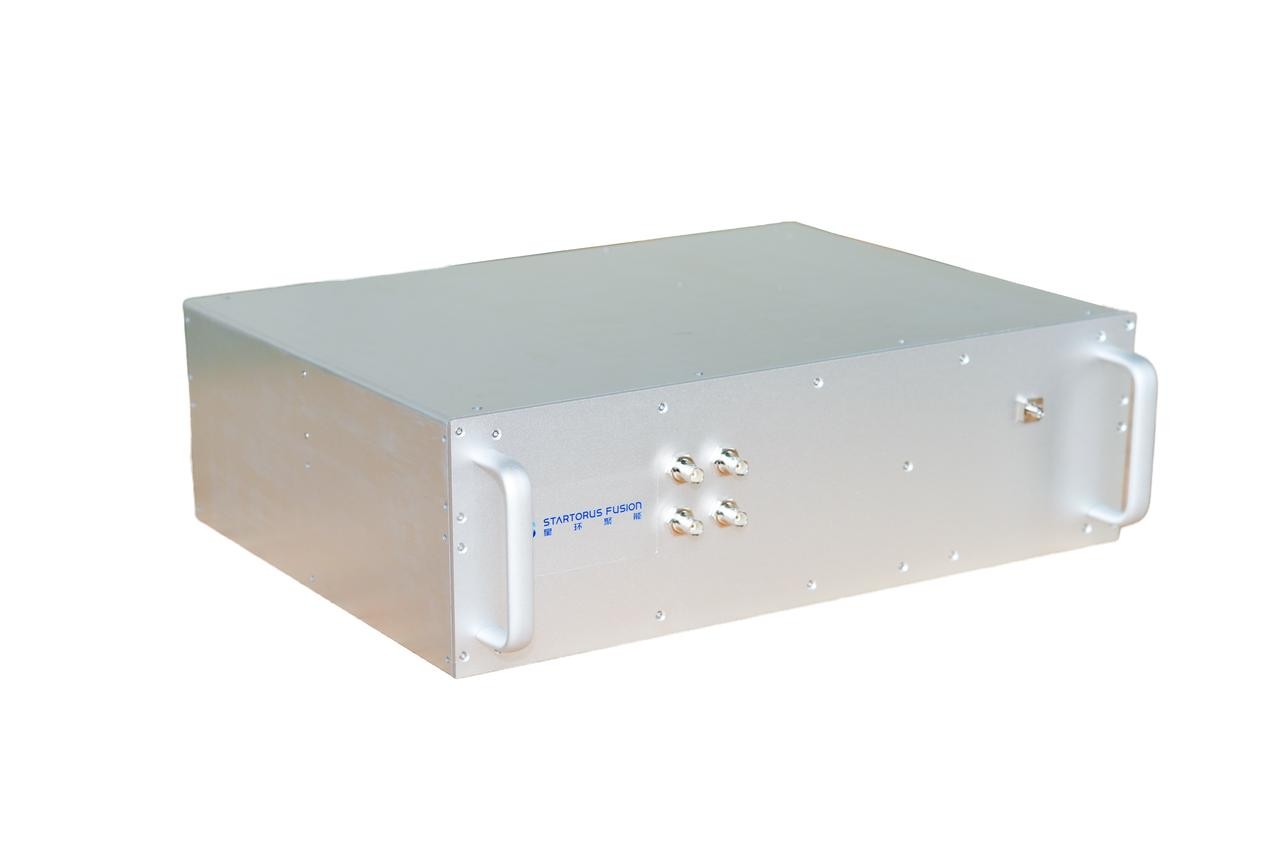
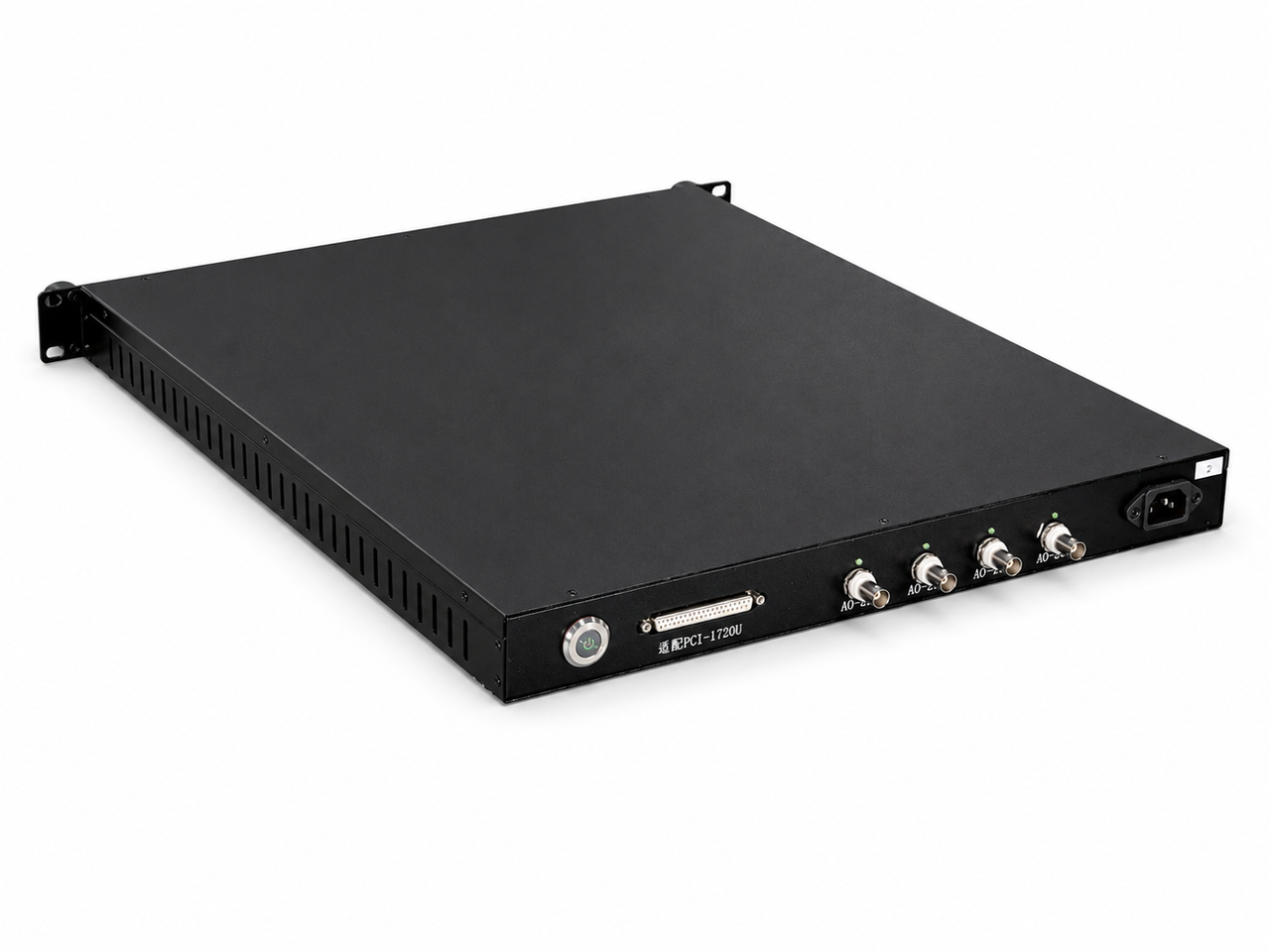
Fiber Optic Interrogator
The results confirm that distributed monitoring of magnet temperature and strain using fiber optics is viable during low temperature current tests and structural response measurement. Compared with traditional point sensors, fiber optic monitoring provides a promising new technical approach for multi-point state sensing inside and on the surface of magnets, local anomaly identification and long-term health monitoring of large-scale magnets.
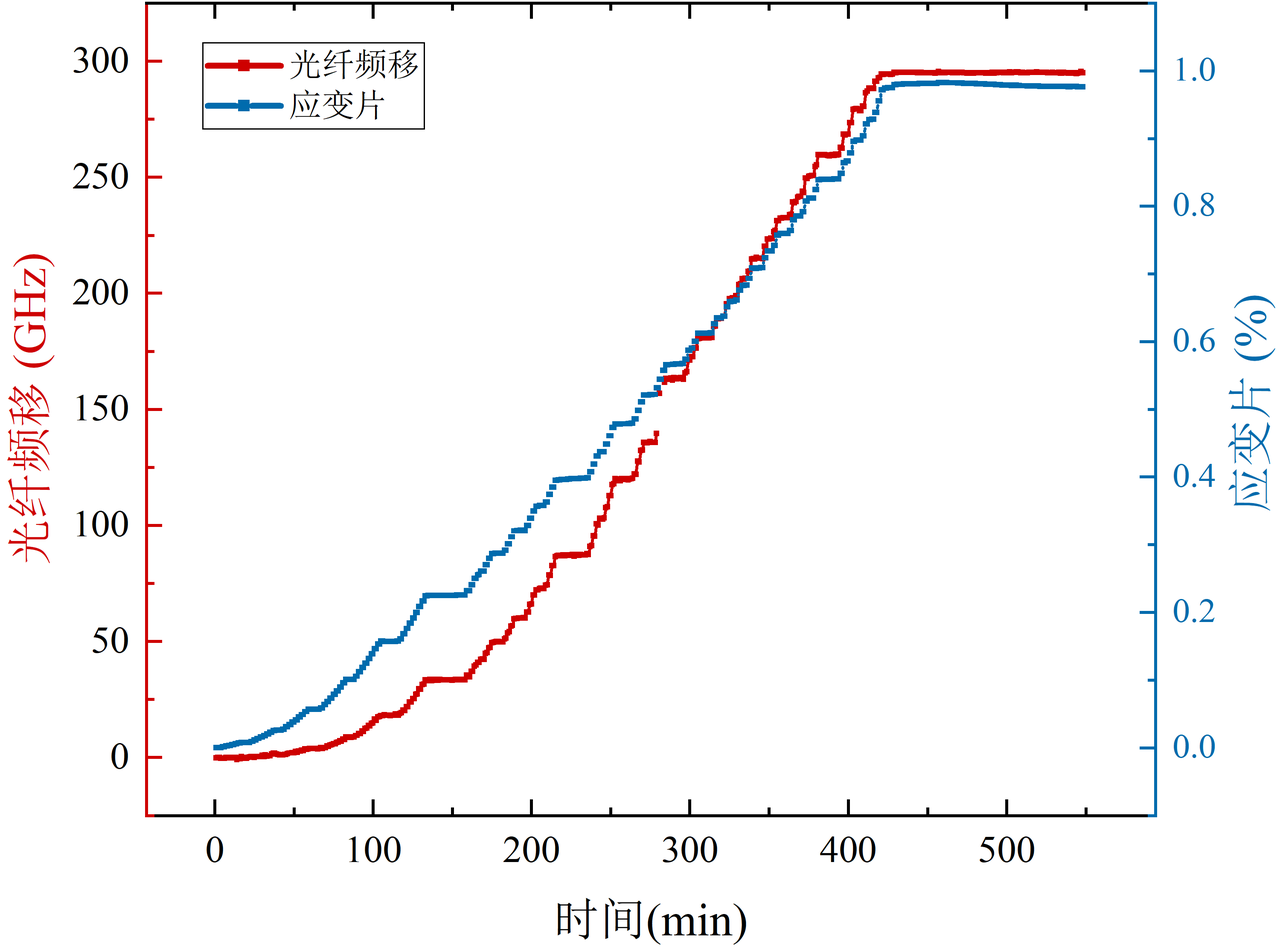
Comparison of Fiber Optic Frequency Shift and Strain Gauge Measurement Results During Excitation Process
From Tape to Complete Magnet: Demonstration of Full Chain System Integration Capability
This test further demonstrates Startorus Fusion’s full chain capability covering superconducting tape processing, coil fabrication and low temperature test system integration. Several work segments reuse self-developed equipment and technical frameworks established in previous magnet development projects, including tape magnetic measurement equipment, two generations of coil winding machines, 10 kiloampere class high temperature superconducting magnet feeders, refrigeration systems and signal acquisition systems. On this basis, the company has developed and integrated the following key systems and equipment to meet requirements for encapsulated tape, compact structure and fast discharge tests:
Tape Encapsulation and Magnet Impregnation Process: Tailored to the superconducting encapsulated tape adopted by this magnet, the team adopts a self-developed tin plating encapsulation process and successfully completes tape encapsulation. The self-developed epoxy impregnation process ensures repeated operation and isolation voltage endurance of the magnet.
Key Components:Core processes and parts including insulated terminals for cooling pipelines, magnet transposition joints and current leads are independently developed and successfully deployed in the magnet test.
Circuit Breaker:Startorus Fusion independently designed and built the circuit breaker system for the central solenoid model coil. It supports a maximum voltage of 5 V and maximum current of 9kA, with turn off time shorter than 10 microseconds. In this test, the breaker controlled magnet fast discharge under 6350A operating condition, realizing rapid switching of the magnet current loop and energy release, guaranteeing smooth fast discharge tests, and verifying its performance under high current, high voltage and fast discharge conditions. The independent development and field application of this breaker lay technical groundwork for discharge testing and quench protection of fusion superconducting magnets in follow up work.
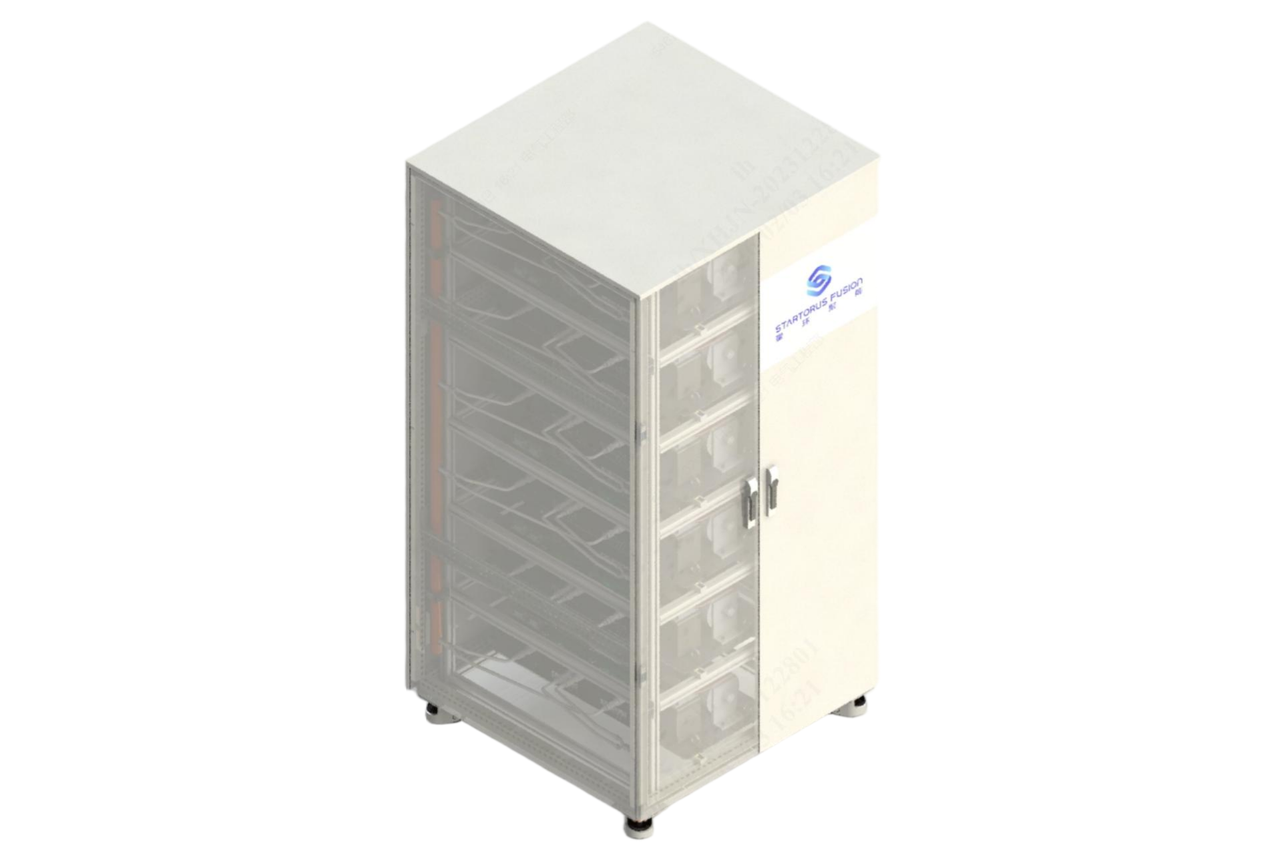
Circuit Breaker
Signal Acquisition:The self-developed Extreme Physics Integrated Tester (EPIC) collects signals of current, magnetic field, temperature, strain, voltage and protection status to monitor magnet operating conditions and structural response. Meanwhile, the self-developed fiber optic interrogator delivers real time strain monitoring for the magnet. Test results are highly consistent with strain gauge readings at the same position, supporting safe operation of the magnet.
Cryogenic and Vacuum System:Fully self-designed and assembled in house, this system achieves coordinated integration of the magnet, radiation shield, dewar and cryogenic pipelines.
Control System:Built with an AI Native framework, the dedicated control system and operation interface for this test enable unified monitoring and control over magnet excitation, demagnetization, fast discharge, refrigeration system and protection status.
Follow up Test and Magnet Development Plan
In follow up work, the central solenoid model coil will proceed with excitation and discharge tests above 12T, as well as repeated discharge tests above 10T. Precise measurement and evaluation of AC loss will also be carried out.
Startorus Fusion continues to push forward its magnet research and development roadmap. Development of the PFMC magnet is underway; self-developed high temperature superconducting current leads and superconducting pulse power supplies will soon enter service; physical and engineering design of CTRFR 1 is nearing completion; and in 2027, the company will launch mass fabrication of magnets for the CTRFR 1 apparatus in Shanghai.