Startorus Fusion
Startorus Fusion has successfully completed rated-parameter testing of its independently developed 10 KA current leads based on second-generation high-temperature superconductors.The leads operated stably through multiple test runs at 10 kA,with resistance below 10 nΩ in the high-temperature superconducting sections.This milestone demonstrates the company's independent command of the core technologies for high-current ,high-temperature superconducting current leads.
Startorus Fusion recently completed rated-parameter testing of its independently developed 10 kA current leads based on second-generation high-temperature superconductors. Connected in a short-circuit configuration, the two current leads, S1 and S2, successfully passed multiple current-carrying tests at 10 kA. Their voltage withstand capability reached 10 kV, and all performance indicators met the design requirements.
Developed as a key component for the magnet system of CTRFR-1(Startorus One), the current leads underwent end-to-end validation covering structural design, manufacturing process development, system integration, and cryogenic testing. This achievement breaks the technological monopoly held by certain domestic and international suppliers in high-current HTS current leads and overcomes the tape supply and manufacturing challenges associated with conventional bismuth-based HTS current leads. It lays a solid foundation for the subsequent development and batch production of current leads for fusion devices. The cryogenic high-current joints and electrical insulation breaks required for the tests were also developed in-house by Startorus Fusion.
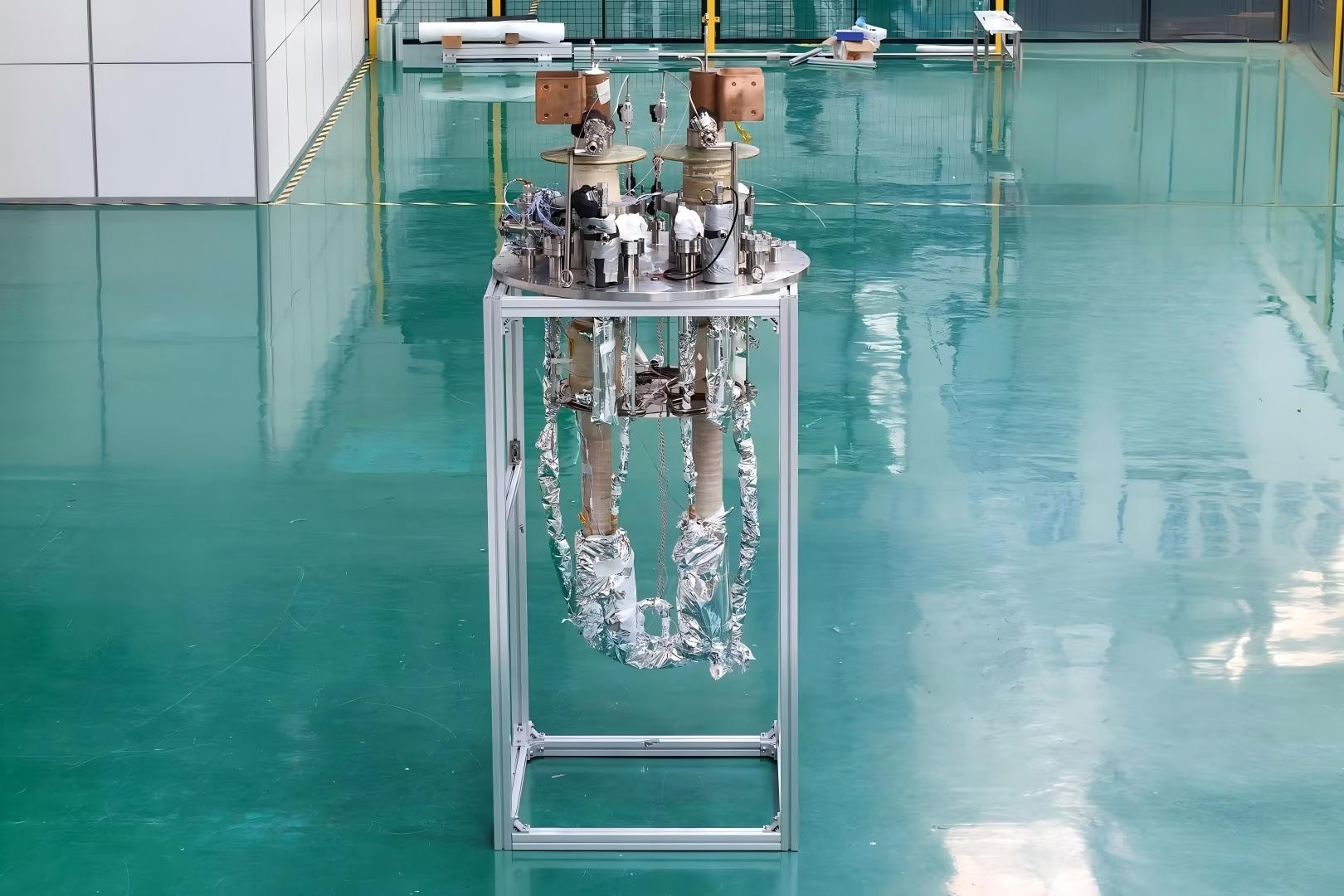
10 kA current leads based on second-generation high-temperature superconductors
An Independently Developed Design with an Integrated Multistage Cooling Structure
Current leads are essential components of superconducting magnet systems, carrying high currents from room-temperature power supplies to cryogenic superconducting magnets. Their performance directly affects the safe and stable operation of the entire device. Conventional copper current leads impose substantial heat loads and high refrigeration costs at high currents. By using the zero-resistance properties of superconducting tapes, HTS current leads can significantly reduce the heat load at the cold end. They are therefore key enabling components for fusion devices, nuclear magnetic resonance systems, and superconducting magnetic energy storage systems.
To meet CTRFR-1's 10 kA-class current transmission requirements, Startorus Fusion adopted an integrated multistage cooling design comprising a room-temperature section, a heat exchanger section, and an HTS section:
Room-temperature assembly: High-conductivity copper provides low-resistance connections and reliable heat dissipation under high-current operation.
Insulating flange assembly: Glass fiber and epoxy resin are cured using vacuum pressure impregnation (VPI) to form the insulation. The cured outer profile is then precision-machined. The assembly achieves an AC dielectric withstand voltage above 10 kV while meeting vacuum leak-test requirements.
Heat exchanger (HEX) assembly: A stacked structure of thick copper fins and separator plates forms efficient heat-transfer fins and nitrogen gas flow channels. Tight sealing and precise dimensional control are also required to achieve efficient heat exchange between cold helium gas and the conductor.
High-temperature superconducting (HTS) assembly: Second-generation yttrium barium copper oxide (YBCO) superconducting tapes are precisely arranged and soldered to create low-resistance connections. This assembly is central to transmitting high currents with low losses.
The complete current lead is compact and highly integrated, balancing current-carrying capacity, thermal losses, dielectric strength, and mechanical reliability.
The team overcame a series of critical manufacturing challenges and established a complete in-house process chain. This covers joining the HTS assemblies and copper joints, wet winding of the overall insulation, argon-shielded arc welding and vacuum pressure impregnation of the insulating flanges, sensor integration and high-voltage insulation, and installation and vacuum leak testing of the complete current leads. These capabilities provide a robust foundation for product performance.
Coordinated Testing Across Multiple Temperature Zones Demonstrates Stable Performance at Rated Current
The tests were carried out on a dedicated current lead test system built in-house by Startorus Fusion. The thermal shield was cooled by the company's independently developed 77 K cold helium gas system. The warm ends of the HTS sections were cooled with liquid nitrogen, while the cold ends were cooled by a 20 K cold helium gas system, enabling precise temperature control and coordinated operation across multiple temperature zones.
With S1 and S2 connected in a short-circuit configuration, the system completed multiple current-carrying test runs at 10 kA. The results showed:
Current-carrying capacity: Greater than 10 kA, with no quench or abnormal voltage drop in the HTS sections, meeting the design specifications.
Joint resistance: The HTS sections of both S1 and S2 exhibited resistance below 10 nΩ, an exceptionally low level that validates the reliability of the joining process.
Operational stability: Performance remained stable through multiple current-carrying test runs, with no abnormalities observed.
Protection system: The company's independently developed circuit breaker system provided quench protection for the current leads, ensuring safe testing.
Signal acquisition: The company's independently developed Extreme Physics Instrument for Comprehensive Measurement (EPIC) provided accurate and reliable synchronous acquisition of multiple signal channels, including current, voltage, and temperature.
Current lead cooling: Stable operation at 10 kA was achieved using liquid nitrogen cooling at the warm ends of the HTS sections, without a subatmospheric liquid nitrogen system.
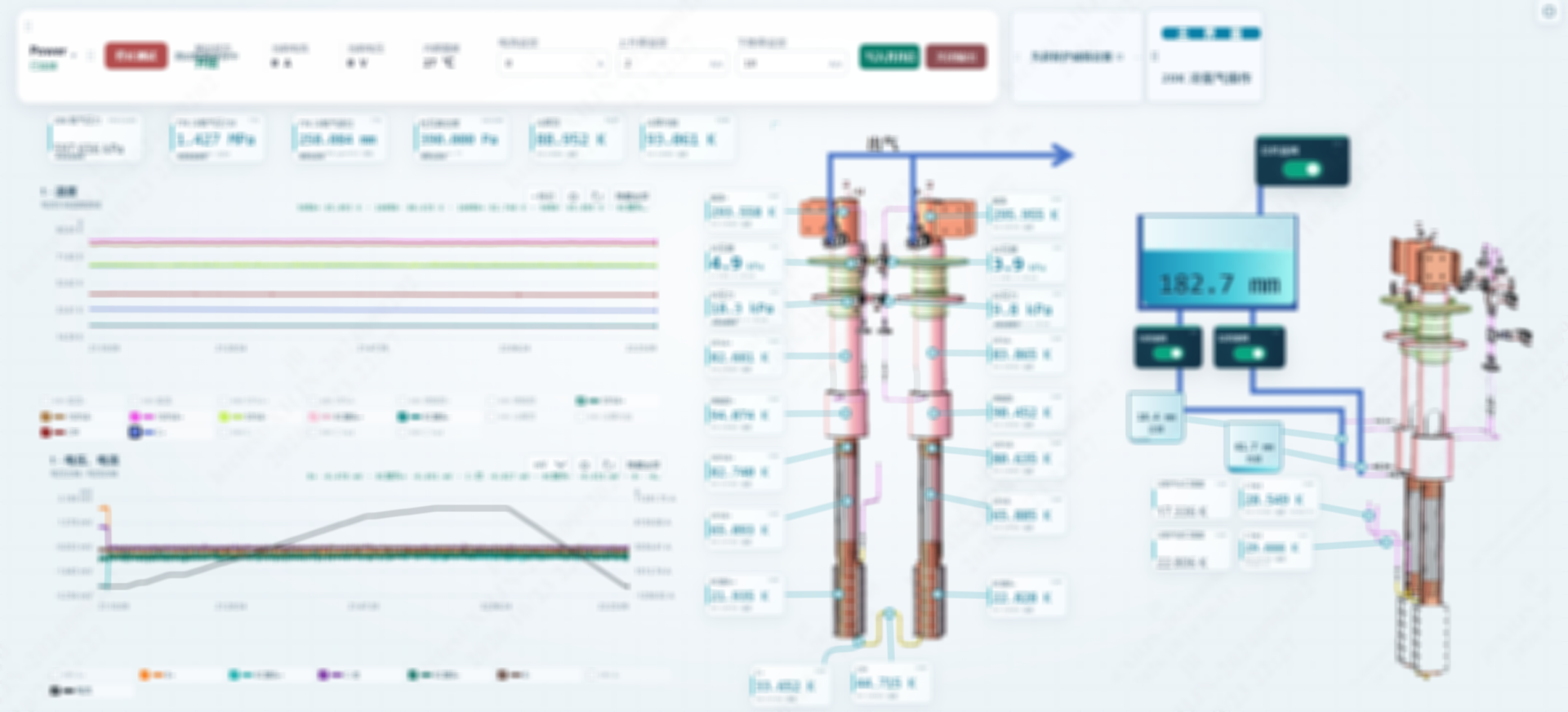
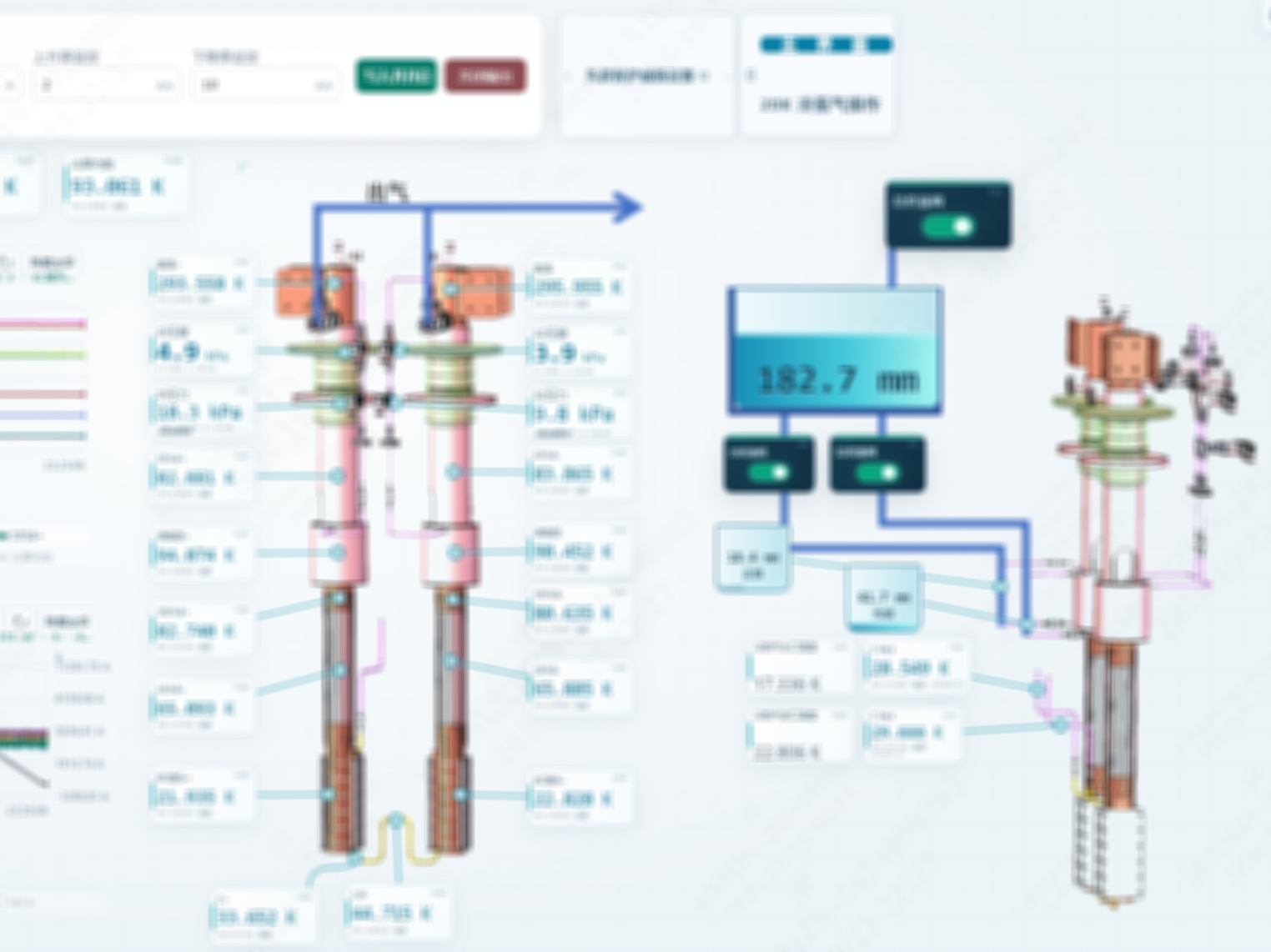
System data acquisition and control interface
The results demonstrate that Startorus Fusion's independently developed 10 kA HTS current leads operate stably at rated current, deliver excellent performance, and meet all key design requirements, making them ready for engineering applications.
Next Steps
Startorus Fusion will carry out further performance validation under a broader range of operating conditions and assess long-term stability. The company will also optimize manufacturing processes and standardize procedures in preparation for batch production. These current leads will be used as standard components in the CTRFR-1 magnet system and integrated with the HTS magnet feeders to form a complete current feeder system.
Guided by the needs of fusion devices, Startorus Fusion will continue to advance the development of HTS magnets and associated key components. Through component validation and system integration, the company will further strengthen its engineering capabilities for fusion devices.